The kindest thing to say about ReindeerGames is that we shall certainly see far worse movies this year. The picture, a would-be thriller, is a mechanical exercise from the get-go, one that positively defies suspension of disbelief with each succeeding twist of a plot no one would ever hatch in real life. Yet within its trashy parameters the lumbering robot-beast does manage to drag itself to the finish line—several times, in fact—and in retrospect one realizes that even its most dubious quick-change reversals were planted in the early reels. That’s more coherence than we can find in a lot of contemporary movies, and for such minimal consolation we must learn to be grateful.
The smartest thing about Batman v Superman: Dawn of Justice – Ultimate Edition (Warner, Blu-ray, Blu-ray 3D, Ultra HD Blu-ray, DVD, Digital, VOD) is its revisionist take on the destruction that concluded Man of Steel, Zach Snyder’s reboot of Superman as a harder, more troubled hero in a darker big screen superhero universe than previous incarnations. After an unnecessary (but at least relatively brief) recap of the origin of Batman laid under the opening credits, we are plunged back into the battle and this time Superman (Henry Cavill) is not the protagonist. This perspective comes from the ground. He’s simply an agent of destruction in the sky as Bruce Wayne (Ben Affleck with a hint of stubble and gray in the temples) roars through the street in what is surely, at least under the hood, the civilian answer to the Batmobile. Man of Steel quite rightly was slammed for its insensitive portrait of epic destruction in an urban center without a thought for the victims below and Snyder, in all his heavyhanded Olympian grandeur, seemed just as oblivious as Superman. Both were so caught up in the personal fight with the demons of Krypton that neither could be bothered to notice civilians crushed like ants in a battle of the titans.
You’ve got to admire the confidence of Gone Girl: this truly odd movie coughs up a bizarre story line mixed with comic social commentary, but it never loses its swagger. Being the eagerly awaited adaptation of a best-selling page-turner will encourage that kind of attitude, I guess.
Gillian Flynn’s 2012 novel has a few twists up its bloodied sleeve, but we’ll be discreet here. The story begins with the disappearance of Amy (Rosamund Pike) from her unloved Missouri home, and escalates into a media circus as suspicion is cast on her husband Nick (Ben Affleck). Nick has the help of his sister (Carrie Coon) and a celebrity lawyer (Tyler Perry, excellent), but his status in the public eye is dismal. Meanwhile, we see excerpts from Amy’s diary, which fill in the picture of a marriage gone sour.
Ben Affleck’s career has been as turbulent and dramatic as they come. He was championed as a rising young actor, celebrated as the Oscar-winning screenwriter (shared with his childhood best friend Matt Damon) of Good Will Hunting, ridiculed as a pretty face in Michael Bay’s action spectacles, and written off after a string of box-office failures. As his star rose and he dated the likes of Gwyneth Paltrow and Jennifer Lopez (which earned the name “Bennifer”), he became tabloid fodder, and his crash was splashed all over the media. He and Lopez split weeks before their wedding, his career took a header with flops like Gigli and Surviving Christmas, and he became an object of parody in an Off-Broadway satire called Matt & Ben, co-written by Mindy Kaling (who played Affleck onstage), not to mention a favorite target of Trey Parker (remember the line “I need you like Ben Affleck needs acting school” from Team America?).
That might be enough to end any career, but instead he stepped off the roller-coaster ride and took stock of his life and career. “I was frustrated with the movies that I had done,” he told The Hollywood Reporter in 2012. “I knew that I had something to offer. I said, ‘Here are the things I’d like to do: I want to direct movies, and I want to be in a movie that I’m enormously proud of. I want to have kids.’ I set out goals.”
By any measure, he is meeting them. He is happily married to Jennifer Garner, with whom he is raising three kids; his acting career has segued into mature screen roles; and third film as a director, Argo, was a popular hit, a critical success and Academy Award winner for Best Picture.
Now he’s been cast as Batman in the upcoming Superman sequel from Zack Snyder (an announcement that sent the fanboy comments pages flaming with an fiery outrage unseen since Heath Ledger was cast as The Joker) and has yet another adult drama coming out this month, playing an online gambling entrepreneur with an international drug sideline in Runner Runner.
What better time than now to look back on the long, strange trip that brought Ben Affleck from rising young star to pop culture punch line to one of Hollywood’s most respected filmmakers.
‘Dazed and Confused’
“Dazed and Confused” (1993): The beginning
While it wasn’t actually his film debut (that honor goes to School Ties), Richard Linklater’s cinematic flashback gave Ben Affleck his first real opportunity to show off his chops. The role of bonehead class bully Fred O’Bannion, a fifth-year senior and compulsive jerk who takes his failure to graduate as an opportunity to beat up incoming freshman for two years running, is little more than an aside in the film. Affleck stands out thanks to the petty cruelty and insufferable arrogance he brings to the part, and the wild-eyed fury during his ultimate humiliation has the feel of real Method acting. One wonders what sense memory that was pulled from.
In his own words: “I realized, when the movie came out, that I played the one really unappealing character in a huge movie full of really appealing characters. I love it. If they did a sequel, I would do it in a second. I mean, how awesome would it be to see what O’Bannion is doing now?”
Argo (Warner), the third feature from actor-turned-director Ben Affleck, was released early in October, just before the traditional roll-out of high-toned dramas and Oscar-bait showpieces gets aggressively competitive, and debuted to glowing reviews, enthusiastic audiences, and impressive box-office. Pretty good for a real-life drama about the stranger-than-fiction rescue of the six Americans who escaped capture when Iranians stormed the U.S. Embassy and took American hostages. But then it’s a savvy picture that takes a few liberties with the historical record to create a nail-biter of an escape thriller.
It was an early Oscar favorite, then lost momentum as the season rolled ahead and competition heated up. For reasons still not clear, Ben Affleck was passed over as a Best Director nominee and even though the film snagged seven Oscar nominations – an impressive count by anyone’s standards – it seemed to have lost its luster. Then it caught its second wind: a Best Director award from the DGA, Best Director and Best Picture Golden Globes, an award for the ensemble cast from the Screen Actors Guild, and BAFTA wins for Best Picture and Best Director. Now, as handicappers tip “Argo” as for the Best Picture Oscar, it arrives on disc and digital delivery less than a week before the Academy Awards.
Awards hype aside, Argo is a terrific piece of filmmaking. Not Zero Dark Thirty brilliance or Life of Pi beauty, mind you, but a solid, well-made film with personality, humor, drama, tension, and a superb sense of time and place. Affleck and screenwriter Chris Terrio establish the era and the complicated history that created the Iranian situation smartly and efficiently, and Affleck seamlessly combines actual news footage with recreations that segue into the story at hand. And while I’m not convinced that the escape-movie contrivances that drive the film’s final act necessary to communicate the stakes of this mad plan, there is something oddly appropriate in the way this meeting of Hollywood fakery and true-story spycraft plays out like a movie.
[Editor’s Note: The House Next Door is currently reissuing a series of articles developed at 24LiesASecond, a now-defunct platform for provocative criticism with an underdog bite. Author Robert Cumbow is a member of the Parallax View collective and his essays are being published simultaneously on Parallax View. The essay below was first published on 11/05/2008, under the editorial guidance of James M. Moran (editor-in-chief) and Peet Gelderblom (founding editor).]
I always believed it was the things you don’t choose that make you who you are: your city, your neighborhood, your family. People here take pride in those things. –Patrick Kenzie
Gosh, what a great year 2007 was for movies. You could wipe out the Academy’s five Best Picture nominees, replace them with five others, and still have an honorable rack of best-picture candidates. One of those second five could easily be Ben Affleck’s directorial debut Gone Baby Gone—my personal vote for best film of the year.
A well-crafted film, richly deserving of the honors it has received, No Country for Old Mennevertheless too often feels like a collection of highlights from Cormac McCarthy’s novel, sometimes about one guy, sometimes about another, never matching the novel’s more focused vision. There Will Be Bloodis even more all over the map—gorgeous to look at, but without the discipline of knowing where it’s coming from, where it’s headed, and what, if anything, those two points have to do with each other. Michael Claytonbounces between rich characterization and caricature, moral complexity and empty-headed mantras about corporations. Atonementseems to be about one thing, but only for the purpose of revealing ultimately that it is about something else altogether—not romance or betrayal but the power of art to liberate, and the impossibility of such liberation. And it takes that war-epic detour in the middle, as if to say, “Hey, guys, this isn’t a chick flick! Honest!†Juno is primarily about language, but uneasily so, since its characters, who are all sharply defined and mostly well-rounded, nevertheless all speak with the same voice—the impossibly quick-witted and widely experienced voice of one clever writer. And the language of the film’s characters is an end, not a means, never satisfactorily bound to the film’s moral theme about decision-making.
Gone Baby Gone is also about decision-making; but unlike the Academy’s five nominees, it is a film that from the first to the last frame never forgets what it’s about, and remains unrelentingly faithful to its theme throughout. Director Ben Affleck shows an unerring eye and a concentration of intent that makes this film really special.
Contains information related to marketing campaigns of the user. These are shared with Google AdWords / Google Ads when the Google Ads and Google Analytics accounts are linked together.
90 days
__utma
ID used to identify users and sessions
2 years after last activity
__utmt
Used to monitor number of Google Analytics server requests
10 minutes
__utmb
Used to distinguish new sessions and visits. This cookie is set when the GA.js javascript library is loaded and there is no existing __utmb cookie. The cookie is updated every time data is sent to the Google Analytics server.
30 minutes after last activity
__utmc
Used only with old Urchin versions of Google Analytics and not with GA.js. Was used to distinguish between new sessions and visits at the end of a session.
End of session (browser)
__utmz
Contains information about the traffic source or campaign that directed user to the website. The cookie is set when the GA.js javascript is loaded and updated when data is sent to the Google Anaytics server
6 months after last activity
__utmv
Contains custom information set by the web developer via the _setCustomVar method in Google Analytics. This cookie is updated every time new data is sent to the Google Analytics server.
2 years after last activity
__utmx
Used to determine whether a user is included in an A / B or Multivariate test.
18 months
_ga
ID used to identify users
2 years
_gali
Used by Google Analytics to determine which links on a page are being clicked
30 seconds
_ga_
ID used to identify users
2 years
_gid
ID used to identify users for 24 hours after last activity
24 hours
_gat
Used to monitor number of Google Analytics server requests when using Google Tag Manager
1 minute
Marketing cookies are used to follow visitors to websites. The intention is to show ads that are relevant and engaging to the individual user.
A video-sharing platform for users to upload, view, and share videos across various genres and topics.
Registers a unique ID on mobile devices to enable tracking based on geographical GPS location.
1 day
VISITOR_INFO1_LIVE
Tries to estimate the users' bandwidth on pages with integrated YouTube videos. Also used for marketing
179 days
PREF
This cookie stores your preferences and other information, in particular preferred language, how many search results you wish to be shown on your page, and whether or not you wish to have Google’s SafeSearch filter turned on.
10 years from set/ update
YSC
Registers a unique ID to keep statistics of what videos from YouTube the user has seen.
Session
DEVICE_INFO
Used to detect if the visitor has accepted the marketing category in the cookie banner. This cookie is necessary for GDPR-compliance of the website.
179 days
LOGIN_INFO
This cookie is used to play YouTube videos embedded on the website.


 The smartest thing about Batman v Superman: Dawn of Justice – Ultimate Edition (Warner, Blu-ray, Blu-ray 3D, Ultra HD Blu-ray, DVD, Digital, VOD) is its revisionist take on the destruction that concluded Man of Steel, Zach Snyder’s reboot of Superman as a harder, more troubled hero in a darker big screen superhero universe than previous incarnations. After an unnecessary (but at least relatively brief) recap of the origin of Batman laid under the opening credits, we are plunged back into the battle and this time Superman (Henry Cavill) is not the protagonist. This perspective comes from the ground. He’s simply an agent of destruction in the sky as Bruce Wayne (Ben Affleck with a hint of stubble and gray in the temples) roars through the street in what is surely, at least under the hood, the civilian answer to the Batmobile. Man of Steel quite rightly was slammed for its insensitive portrait of epic destruction in an urban center without a thought for the victims below and Snyder, in all his heavyhanded Olympian grandeur, seemed just as oblivious as Superman. Both were so caught up in the personal fight with the demons of Krypton that neither could be bothered to notice civilians crushed like ants in a battle of the titans.


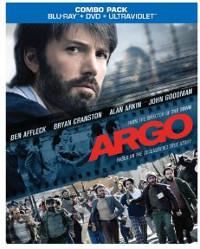 Argo (Warner), the third feature from actor-turned-director Ben Affleck, was released early in October, just before the traditional roll-out of high-toned dramas and Oscar-bait showpieces gets aggressively competitive, and debuted to glowing reviews, enthusiastic audiences, and impressive box-office. Pretty good for a real-life drama about the stranger-than-fiction rescue of the six Americans who escaped capture when Iranians stormed the U.S. Embassy and took American hostages. But then it’s a savvy picture that takes a few liberties with the historical record to create a nail-biter of an escape thriller.


