A Pistol for Ringo/The Return of Ringo: Two Films by Dessario Tessari (Arrow, Blu-ray) A Fistful of Dynamite (Kino Lorber, Blu-ray)
Duccio Tessari is not one of the directors known for spaghetti westerns. In fact, he only directed two in his long and successful career, both with Giuliano Gemma (billed as Montgomery Wood) playing against the mercenary expectations of the defining spaghetti western anti-hero. Both make their American home video debut as Blu-ray double feature.
Arrow Films
In A Pistol for Ringo (Italy, 1965), Gemma is a wily gunfighter known to all as Angel Face who is released from jail to infiltrate a gang of Mexican bank robbers holding a rancher’s family hostage in their manor home, which they’ve guarded like fortress. Sancho (Fernando Sancho) plays the jolly bandit king who acts like he’d prefer to let everyone live and then has his men drop anyone who gets out of line, but he isn’t shy about executing his hostages as the stand-off drags on, and he targets the lowly Mexican laborers, hardly the actions of the Robin Hood he pretends to be.
Tessario was an uncredited writer on A Fistful of Dollars and the high body count, ruthless killers, double crosses and calculated ambushes seem to be informed, if not outright inspired, by Leone’s film. But while Ringo appears to be a classic heartless mercenary bidding up his services, he turns out to be more of a lovable rogue with a soft spot for women and kids and a loyalty to the good guys.
[Originally published in Movietone News 36, October 1974]
Francesco Rosi’s attempt to adapt the method of TheMattei Affair to the career of Charles “Lucky” Luciano fails almost completely. What made the earlier film such a morally disturbing and aesthetically challenging experience was its formal complexity as a real-life mystery story in which the levels and processes of the narrative act became implicated in the hypotheses and half-truths it hoped to sort out. No such structural complexity informs LuckyLuciano. Sections of the movie are compelling, partly because they are imaginatively filmed, partly—the greater part—because they provide us with fascinating historical dirt: e.g., the connivance between Vito Genovese (Charles Cioffi) and the United States Army after the liberation of Italy. But whereas the fractured chronology and mixture of narrative modes served in MatteiAffair to render the very abundance of its mountain of evidence meaningful, here the method merely produces a muddle.
[Originally published in Movietone News 43, September 1975]
Hennessy … the name offers to hang over this movie the way “Juggernaut” and “Drabble” spiritually pervaded theirs (Drabble having been the original title of The Black Windmill). That a fellow named Hollis lays more of a claim on our attention, let alone imagination, says a lot about the present object of inquiry. That Hollis is played by the man who dreamed up the original story, Richard Johnson, could say even more. He’s the English cop, specialist in Irish affairs, who’s become an obsessive on the theme of Hibernian politics of violence, to the extent that his own humanity seems ever on the verge of immolation by the fires of his corrective passion. There’s no getting away from seeing him as the counterpart of the eponymous Irish explosives genius who, shaken out of his determined pacific by the crossfire killing of his wife and daughter, has swaddled himself in gelignite and set out to blow up the Queen and most members of both Houses at the opening of Parliament. In this role Rod Steiger does his tightlipped, violence-benumbed shtick, and hence—inadvertently, I’d say—becomes a straightman to Johnson’s overtly raging hunter.
The first few minutes of The Pawnbroker, the 1964 screen version of Edward Lewis Wallant’s novel about a concentration camp survivor in New York City, takes us from an idealized memory of a family picnic in pre-World War II Europe (a soft-focus dream about to tip into nightmare) to an anonymous Long Island suburb to the slums of Harlem, where Sol Nazerman (Rod Steiger) runs a cluttered pawnshop. It’s a series of whiplash culture shocks that doesn’t exactly tell us what we need to know about Sol’s journey but sets the stage for his dislocation. Once he lived his life. Now he simply endures it.
His young, energetic assistant Jesus (Jaime Sánchez of The Wild Bunch) talks a mile a minute and many of the shop’s walk-ins, a stream of addicts, hookers, thieves, and a few lonely souls more desperate for contact than cash, try to engage Sol in the most rudimentary of conversations. But Sol is an impenetrable wall of business. He’s not rude or dismissive, even when slurs are spit his way, simply terse and direct and unyielding. “I have escaped my emotions,” is how he explains it to Tessie (Marketa Kimbrell), the widow of his once-closest friend. To an insistent social worker (Geraldine Fitzgerald) who keeps gently pressing him to talk, he’s more forthright about his dispassion and disinterest in his customers or anyone else. “Black, white, or yellow, they are all equally scum. Rejects.” After losing his wife, his children, and his parents to the Nazis and the concentration camps, Sol has lost faith in God and humanity alike.
[Originally published in Movietone News 50, June 1976]
As with many of Fuller’s films, Run of the Arrow is finally about nothing less that the United States, even though it is “just” a Western. As a matter of fact, it is perhaps the most conventionally “Western” of Fuller’s Westerns, the only one that really utilizes the redrock and sagebrush landscapes that one associates with the West of directors like Mann, Ford, and Walsh (compare, for instance, ColoradoTerritory‘s forbidding geography to the contours of real and potential space that encompasses a quest in RunoftheArrow), and the only one that is in color—vivid color, bright with eye-catching primary hues that become motifs on the political and historical canvas of Fuller’s story. Blood is red, and so are the stripes of the American Flag that O’Meara (Rod Steiger), a bitter Confederate soldier who leaves his home after the war. and seeks out a viable identity as a Sioux Indian, initially rejects and later accepts as his. The uniforms and wagons of the cavalry are blue, and so are the feathers on the lance of Blue Buffalo (Charles Bronson), the Sioux chief whose tribe defeats that band of cavalry; so, for that matter, are the blueprints for a new fort to go up in the middle of the Sioux nation most definitely blue, creating an analogy between plans for this specific outpost and the manifest destiny blueprinted in the more encompassing vision of an America moving ever westward.
The film’s themes, which intertwine, support and counterpoint each other, operate on this dual level of significance; the personal crises of identity and the more far-reaching problems of national unity are the components of Fuller’s vision, a cumulatively dark picture of the forces that drove men west to expand the boundaries of their country. The story itself has a sinister way of revolving in ever tightening circles around the antagonism between O’Meara and Driscoll (Ralph Meeker), the Yankee officer whom O’Meara wounds with the last bullet fired in the Civil War. They meet up again out West, Driscoll as the leader of a detachment of cavalry commissioned to guard some Army engineers who intend to build a fort in Sioux territory, O’Meara as a scout for the Indians. A parallel conflict springs up between Driscoll and Captain Clark (Brian Keith), the latter a stabilizing force in a world that balances the self-hating O’Mearas against the vicious opportunists like Driscoll. Clark’s strength becomes the most reliable core of value in the film, shoring up the foundations of a reasonable patriotism that will endure beyond both the reactionary ethics of the old Sioux scout Walking Coyote (“I don’t know what this world’s coming to,” he says as a party of young bucks get drunk and prepare to string him up) and Driscoll’s incipient fascism. Clark’s spiel to O’Meara questioning O’Meara’s rejection of home and flag and ending with the parable of Philip Knowland, the man without a country (done all in one breathless take, the only movement being an honest and unashamed nudge to a slightly closer shot when the legend of Knowland is invoked) is eloquent enough to rise high above the platform jingoism of a flag-waving patriot, and is indeed infused with an almost Fordian sense of privileged participation. It counterpoints the more patly violent and potently chaotic aspects of Fuller’s films, offering us an openness and resilience that seems as essentially Fullerian as his attention-grabbing visual style and volatile worldview.
[Originally published in slightly different form in Movietone News 62-63, December 1979]
Before anything happens in The Illustrated Man, a voice (Claire Bloom’s) warns us that those who try to see beyond their own times find themselves facing problems that cannot be explained in present-day terms. This gets reprised at the very end of the movie, by which time just about nothing actually has been explained. The Illustrated Man is a very odd movie indeed, and here and there a thoroughly frustrating one. I can’t decide how much of the obfuscation is genuine poetic mystery and how much a sheer cop-out on the part of screenwriter-producer Howard Kreitsek (not very active since this 1969 movie) and director Jack Smight. But the film, for all its many faults, stays with me and I fancy its inner workings are worth teasing out.
Time is of the essence. When and where are we? Ms. Bloom’s opening voiceover accompanies an image of a tranquil countryside lake. We hold on this and at long last the old Warner-Seven Arts logo inscribes itself on the screen. An old-fashioned automobile parks a naive-looking youth (Robert Drivas) by the lake and moves on; we never see its driver again. Willie, the youth, is soon joined by a surly fellow carrying a bag with a dog in it. The stranger, Carl (Rod Steiger), middle-aged, needing a shave, broken-nosed, seems to come from nowhere and is plainly needing funds. “You hoboing?” he asks Willie. The 1930s? Of course. But what’s a Depression bum doing with a Pekinese, of all dogs? And why is it cooped up in a bag all the while? “He likes it hot,” snarls Carl: “Like me!” He kids us not. Though the midday sun blazes and the sweat pours off Willie, Carl is begloved and booted, and covered in an enormous coat. Why? This question, at least, gets an answer, and swiftly.
Contains information related to marketing campaigns of the user. These are shared with Google AdWords / Google Ads when the Google Ads and Google Analytics accounts are linked together.
90 days
__utma
ID used to identify users and sessions
2 years after last activity
__utmt
Used to monitor number of Google Analytics server requests
10 minutes
__utmb
Used to distinguish new sessions and visits. This cookie is set when the GA.js javascript library is loaded and there is no existing __utmb cookie. The cookie is updated every time data is sent to the Google Analytics server.
30 minutes after last activity
__utmc
Used only with old Urchin versions of Google Analytics and not with GA.js. Was used to distinguish between new sessions and visits at the end of a session.
End of session (browser)
__utmz
Contains information about the traffic source or campaign that directed user to the website. The cookie is set when the GA.js javascript is loaded and updated when data is sent to the Google Anaytics server
6 months after last activity
__utmv
Contains custom information set by the web developer via the _setCustomVar method in Google Analytics. This cookie is updated every time new data is sent to the Google Analytics server.
2 years after last activity
__utmx
Used to determine whether a user is included in an A / B or Multivariate test.
18 months
_ga
ID used to identify users
2 years
_gali
Used by Google Analytics to determine which links on a page are being clicked
30 seconds
_ga_
ID used to identify users
2 years
_gid
ID used to identify users for 24 hours after last activity
24 hours
_gat
Used to monitor number of Google Analytics server requests when using Google Tag Manager
1 minute
Marketing cookies are used to follow visitors to websites. The intention is to show ads that are relevant and engaging to the individual user.
A video-sharing platform for users to upload, view, and share videos across various genres and topics.
Registers a unique ID on mobile devices to enable tracking based on geographical GPS location.
1 day
VISITOR_INFO1_LIVE
Tries to estimate the users' bandwidth on pages with integrated YouTube videos. Also used for marketing
179 days
PREF
This cookie stores your preferences and other information, in particular preferred language, how many search results you wish to be shown on your page, and whether or not you wish to have Google’s SafeSearch filter turned on.
10 years from set/ update
YSC
Registers a unique ID to keep statistics of what videos from YouTube the user has seen.
Session
DEVICE_INFO
Used to detect if the visitor has accepted the marketing category in the cookie banner. This cookie is necessary for GDPR-compliance of the website.
179 days
LOGIN_INFO
This cookie is used to play YouTube videos embedded on the website.


 [Originally published in Movietone News 36, October 1974]
 [Originally published in Movietone News 43, September 1975]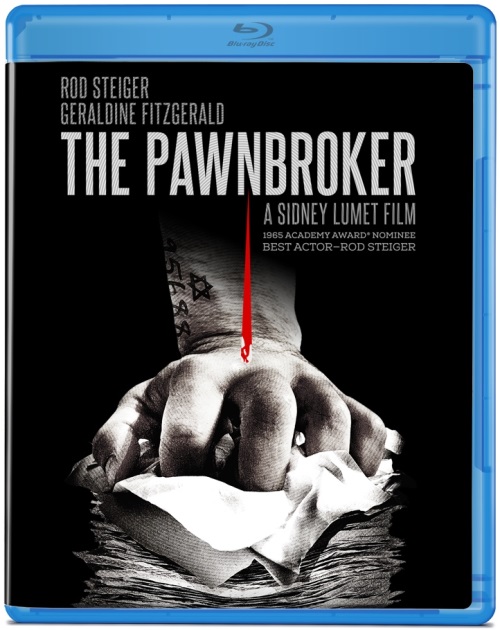

 [Originally published in Movietone News 50, June 1976]
 The film’s themes, which intertwine, support and counterpoint each other, operate on this dual level of significance; the personal crises of identity and the more far-reaching problems of national unity are the components of Fuller’s vision, a cumulatively dark picture of the forces that drove men west to expand the boundaries of their country. The story itself has a sinister way of revolving in ever tightening circles around the antagonism between O’Meara and Driscoll (Ralph Meeker), the Yankee officer whom O’Meara wounds with the last bullet fired in the Civil War. They meet up again out West, Driscoll as the leader of a detachment of cavalry commissioned to guard some Army engineers who intend to build a fort in Sioux territory, O’Meara as a scout for the Indians. A parallel conflict springs up between Driscoll and Captain Clark (Brian Keith), the latter a stabilizing force in a world that balances the self-hating O’Mearas against the vicious opportunists like Driscoll. Clark’s strength becomes the most reliable core of value in the film, shoring up the foundations of a reasonable patriotism that will endure beyond both the reactionary ethics of the old Sioux scout Walking Coyote (“I don’t know what this world’s coming to,” he says as a party of young bucks get drunk and prepare to string him up) and Driscoll’s incipient fascism. Clark’s spiel to O’Meara questioning O’Meara’s rejection of home and flag and ending with the parable of Philip Knowland, the man without a country (done all in one breathless take, the only movement being an honest and unashamed nudge to a slightly closer shot when the legend of Knowland is invoked) is eloquent enough to rise high above the platform jingoism of a flag-waving patriot, and is indeed infused with an almost Fordian sense of privileged participation. It counterpoints the more patly violent and potently chaotic aspects of Fuller’s films, offering us an openness and resilience that seems as essentially Fullerian as his attention-grabbing visual style and volatile worldview.

 [Originally published in slightly different form in Movietone News 62-63, December 1979]