[Originally published in The Weekly (Seattle), May 1977]
Annie Hall is far and away the best movie Woody Allen has made. Much more importantly, it’s good and rich and satisfying in terms that, heretofore, have had only negative reference to Allen’s film career, demarcating the limits of his scope as a writer-director-star.
The picture was called Woody Allen Film throughout its two-year conception and realization—a title that made all-too-perfect sense with regard to the trajectory his filmmaking has been describing. With the qualified exception of Everything You Always Wanted to Know About Sex…, all Allen’s films have flaunted his personal centrality as pretender to the throne of Chaplin, Keaton, or whomever you happen to uphold as the comic star-auteur par excellence. Their cast lists abound in interesting players whose actual participation often amounts to nothing more than a walk-on; very few—Gene Wilder in Sex, Jessica Harper in the weird Persona parody just before the end of Love and Death—have managed to register decisively enough to be retained on the retina of memory the next day or, indeed, as long as the film itself lasts.
[Originally published in Movietone News 54, June 1977]
In Annie Hall Woody Allen has created his most personal, most serious, most painfully funny, and best film. The first three don’t necessarily imply the last, but in this case that’s the way it works out. The concern with the interrelation between comedy and pain—a transformation of the earlier Allen’s more prosaic concern with love and death—is the center of the film, as it is the center of the life of standup comic Alvy Singer, Allen’s thinly disguised portrait of himself. The simultaneous egocentricity and self-denigration implied in Allen’s portrayal of Singer—and, indeed, in Allen himself—is summed up in his delivery of a classic joke in his opening, Bergmanesque monologue. Like most of the jokes Freud cites in his Jokes and Their Relation to the Unconscious, it’s not the kind of joke you laugh at: “I wouldn’t want to join a club that would have me for one of its members.” True, Allen’s throwaway style evokes a chuckle; but for Alvy Singer there is more painful truth in this paradox of a joke than there is comic hilarity. It’s actually the second of two jokes that open the film, the first being an even less laughable one about life being ugly, miserable, depressing, and all too short.
The proposition that life is both agonizing and dear is sustained throughout. When record entrepreneur Tony Lacy invites Alvy Singer to a party that promises to be “very mellow,” Alvy declines, explaining, “When I get too mellow I ripen, and then I rot.” The vision of life-vs.-death pervades everything (“All the books you ever gave me had Death in the title,” girlfriend Annie Hall complains), and the double-layered vision is reflected emphatically in the film’s imagery. Alvy was born and raised in a house underneath the rollercoaster at Coney Island: superficial joy on top of nervous depression: corrosive death gnawing at the underpinnings of assertive life. Alvy’s comedy—and the play he writes about himself and Annie near the end of the film—is his response to pain, and it is a fantasy response. The play ends the way Alvy wishes the real relationship with Annie had climaxed. Elsewhere he casually produces Marshall McLuhan from behind a theater lobby sign to refute the bullshit artist in the ticket line who pontificates about McLuhan without knowing his work. “If life could only be like this!” Alvy tells the camera, acknowledging and embracing his own dependence on a fantasy of a world that will reaffirm and justify him and his ideas. In the film, people on the street don’t mind being stopped by Alvy to give their point of view, or elucidate their corner of the world; and many of them seem to have information and understanding to which he is not privy, though they are happy to share it with him and offer advice.
[Originally published in Movietone News 60-61, February 1979]
As if to avoid distracting mumbles of “Oh, guess where he got that!” in the middle of his unashamedly imitative first non-comedy, Woody Allen gets his most Bergmanesque shot out of the way right up front. It’s a soft, dreamy, quiet interior of a woman running her hand inquiringly across a windowpane; and it establishes straightaway the film’s inside/outside polarity, with the woman seemingly trying to comprehend the shell that separates one existence from another. The glass of the window, like the wall of the eye, or the lens of the camera, is the transparent, impenetrable, inexorable demarcation between the in-here and the out-there. Nothing new; but from here Allen goes on to build a distinctly American Bergman film, accessible, even downright obvious in contrast with the Swedish master’s arcane musings.
“My husband Otto was dyslexic,” recalls Elaine May’s sweet but ditzy character, May, in Woody Allen’s new film. “The only word he could read correctly was his own name.”
Ah, bliss. The return of an Allen trademark: a layered-in, conceptual one-liner counterpointing the hard narrative thrust of a scene. In this case, a scene in which both May and Allen’s characters are exercised about some criminal plans. The tossed-off gag gives the moment a shot more oxygen as only Allen can do, delighting in May’s surreal urgency unrelated to the crisis at hand.
There are a handful of dialogue-free moments in Wonder Wheel, and they come as an enormous relief. Woody Allen’s talky drama—the 48th feature for the 82-year-old director—has a small group of characters yammering at each other for much of its 101 minutes. But there are a couple of times when the central figure, Ginny (Kate Winslet), is allowed to be alone with herself and her thoughts. Ginny frets, or flips through her movie magazines, or ponders doing something terrible in order to cling to the slim thread of pleasure she has recently had in her life. For a few seconds the movie breathes, partly because a terrific actress is allowed to bring her power into the space—and partly because these are among the only moments in the film when everybody isn’t trying way, way too hard to make something happen.
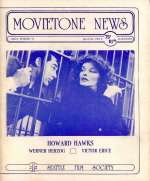
[Originally published in Movietone News 29, January-February 1974]
Sleeper is the funniest new film I’ve seen in years. TakingOff was the last recently made film that left me laughed out, and Sleeper reduced me to complete helplessness. In it, writer-director-actor Woody Allen projects himself into the year 2173 as a result of having been frozen for preservation some two hundred years earlier. The picture abounds in delicious detail, almost entirely of a satirical nature, but I’ll pass up the temptation to cannibalize his wit by recounting any of it, and talk instead about the progress his career is making.
In Annie Hall, Los Angeles is “a city where the only cultural advantage is being able to make a right turn on a red light.” That was 40 years and 40 Woody Allen movies ago, and the humor that worked back then—L.A.’s mind-set summed up thus: “I’m going to have the alfalfa sprouts and plate of mashed yeast”—has mellowed with time. For Café Society, Allen remains skeptical about La-La Land, but this portrait of a New York lad trying his luck in 1930s Hollywood is sticky with nostalgia: wrapped in lush costuming, honeyed by golden California light, and scored to the vintage toe-tappers that Allen continues to love. Satirical arrows are dutifully aimed, but the overall gorgeousness makes the target a soft one.
The lad is Bobby Dorfman (Jesse Eisenberg), whose Uncle Phil (Steve Carell in a good turn) has become a successful movie agent. Bobby gets stuck with menial jobs, but he’s able to observe chic pool parties and meet movers and shakers.
The new Woody Allen movie has the flaws that have become familiar in the latter part of his career: slack pacing, too much exposition, and a big age discrepancy between leading man and lady. I must be worn down by all that, because I truly enjoyed Magic in the Moonlight. The exposition’s still a problem — Allen’s script must explain the premise a dozen times — but here the languid pacing is just the right rhythm for this sunny dream of a film.
The setting is 1920s France, where a famous magician, Stanley (Colin Firth), takes on a challenge. Along with making elephants disappear on stage, he’s known offstage as a great debunker of frauds and charlatans.
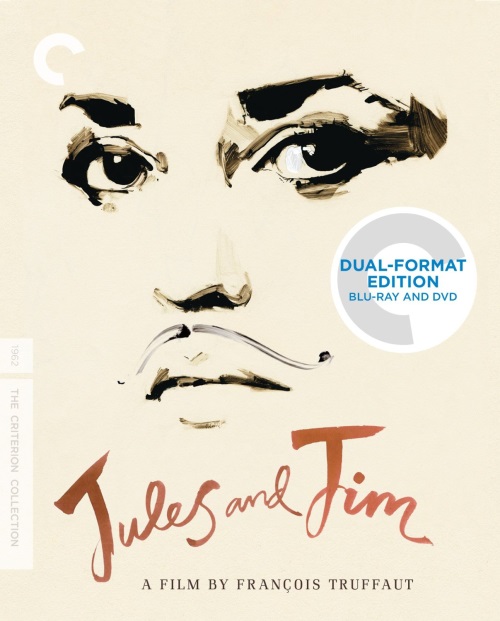
Jules and Jim (Criterion, Blu-ray+DVD Dual-Format) is another Criterion upgrade of a previously released DVD, debuting on Blu-ray mastered from a new, restored 2K digital film transfer and released in a dual-format edition. An intense and reckless Jeanne Moreau delivers a performance steeped in mystery and enigma in Francois Truffaut’s tale of friendship and love. Oskar Werner is the Austrian Jules, a vibrant young biologist on slow, melancholy slide while Henri Serre plays his best friend, the enigmatic, introspective Parisian writer Jim. A scandal upon its release for its unapologetic treatment of a menage-a-trois, the film contrasts the stylistic freedom of nouvelle vague techniques (zooms, flash-cuts, handheld shots taken literally on the run) in the scenes of carefree youth with a somber, subdued approach for the “adult” years of impermanence. The handsome period piece jackrabbits through the story with concentrated scenes interspersed with newsreel footage and montages, pulled together by an interpretive “literary” narrator who layers the film with an added richness.
Carried over from the earlier DVD edition are two commentary tracks (one by co-writer Jean Gruault, Truffaut collaborator Suzanne Schiffman, editor Claudine Bouche, and Truffaut scholar Annette Insdorf, the other featuring actress Jeanne Moreau and Truffaut biographer Serge Toubiana), excerpts from the 1985 documentary The Key to Jules and Jim about the author Henri-Pierre Roche, an episode of Cineaste de notre temps from 1965 dedicated to Truffaut, and a segment from the series L’Invitie du Dimanche from 1969 with Truffaut, Moreau, and filmmaker Jean Renoir, footage of Truffaut interviewed by Richard Roud at the 1977 New York Film Festival, excerpts from Truffaut’s presentation at a 1979 American Film Institute “Dialogue on Film,” a 1980 archival audio interview with Truffaut conducted by Claude-Jean Philippe, video interviews with cinematographer Raoul Coutard and co-writer Jean Gruault, and a video conversation between scholars Robert Stam and Dudley Andrew. The accompanying booklet features an essay by critic John Powers, a 1981 piece by Truffaut on Roché, and script notes from Truffaut to co-screenwriter Gruault.
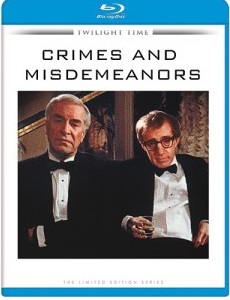
It feels odd to write that Crimes and Misdemeanors (Twilight Time, Blu-Ray) is my favorite Woody Allen film. It certainly doesn’t make me feel good, though it does offer a mix of despair and elation, and it may be a tad heavy (and yes, perhaps even heavyhanded) at times. Yet I think it’s one of his masterpieces, with characters that live with such a power within their defining contradictions and a theme that reminds us that life isn’t fair and how we deal with the unfairness is the measure of our humanity. Martin Landau received his second Academy Award nomination for his understated performance of an adulterer who is ‘persuaded’ (by Jerry Orbach) to let a hitman take care of a problem, namely the mistress (Anjelica Huston) who refuses to go away. In a parallel story Allen is a documentary filmmaker who falls for his attractive producer (Mia Farrow) while shooting a distasteful project that he sabotages out of juvenile pique. The bittersweet turns simply bitter as it builds towards the climax, but even amidst all the emotional damage, Allen still finds a spark of hope. It’s one of his masterpieces. Sven Nykvist shoots the film with a mix of warmth and remove. And remember: if it bends, it’s funny. If it breaks, it’s not funny. Features Twilight Time’s trademark isolated musical score and an eight-page booklet with an essay by Julie Kirgo. Limited to 3000 copies, available exclusively from Screen Archives and TCM.
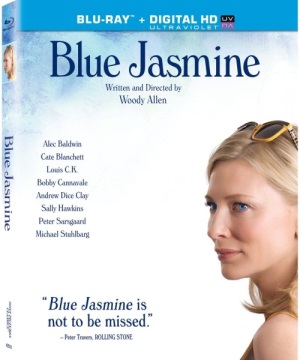
Blue Jasmine (Sony, Blu-ray, DVD, Digital, On Demand) earned Cate Blanchett her sixth Oscar nomination and clearly she is a wonder in this film. Woody Allen reworks A Streetcar Named Desire‘s Blanche DuBois as a woman who remade herself into a Park Avenue socialite and is now adrift after her husband (Alec Baldwin) turned out to be a Madoff-like crook. Left with nothing but expensive tastes, an utterly self-absorbed personality, alcohol and pill abuse, and a nervous breakdown from which she has not completely recovered, she takes refuge with her working class sister (Sally Hawkins, also nominated this year) and her contractor boyfriend (Bobby Cannavale) without a shred of appreciation.
Woody is often sharp with character study and Jasmine is something else, but his portrait of San Francisco working class folk is less convincing and carried only by the strength of a typically excellent cast (it also co-stars Louis C. K., Andrew Dice Clay, Peter Sarsgaard and Michael Stuhlbarg) and an honesty and commitment that the socially poised rich of the film lack. But Blanchett is riveting as the unraveling, self-pitying socialite on the skids, drinking and popping Xanax until it lubricates her slide into denial.
Blu-ray and DVD both feature a 25-minute press conference with actor Cate Blanchett, Peter Sarsgaard and Andrew Dice Clay and a shorter promotional “Notes from the Red Carpet” featurette. No surprise, Allen makes no appearance in any of the supplements. The Blu-ray also features a bonus Ultraviolet Digital HD copy of the film.
Another Oscar nominee, Captain Phillips (Sony, Blu-ray, DVD, Digital, On Demand) directed by Paul Greengrass and starring Tom Hanks (who was overlooked this year) as the captain of a cargo ship boarded by Somali pirates, arrives on disc and digital. The film picked up six nominations, including Best Picture, Adapted Screenplay, and Actor in a Supporting Role for Barkhad Abdi, a Somali non-actor who made a vivid debut in the role of a pirate in a desperate situation. No review copy was made available before deadline so no notes on the extras.
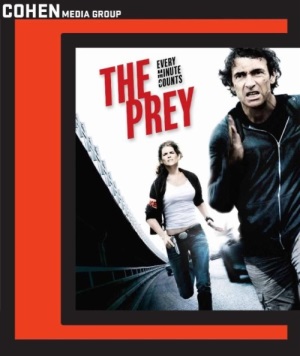
The Prey (Cohen, Blu-ray, DVD), a French crime thriller that goes for rough-and-tumble grit over slick Luc Besson spectacle, is a clever idea with a lazy script more concerned with creating fights, chase scenes, and escapes from police dragnets than in constructing anything resembling intelligent police work. Albert Dupontel has an appropriately scuffed-up quality as Franck, a hard-luck bank robber serving out the last months of a sentence for a success robbery, until he has to escape when he learns that his recently released religious-fanatic cellmate (Stéphane Debac) is actually a serial killer heading for his wife and child. Alice Taglioni is the tough-as-nails detective assigned to track him down as new evidence (planted by the real killer) implicates Franck in a string of unsolved murders.
It’s not as complicated as it sounds—it’s basically The Fugitive with a creepy psycho in place of the one-armed man and the life of a kidnapped child at stake—and Eric Valette delivers on the action if not on the intelligence of the cops (who would forget to stake out the suspect’s own home after he escapes prison?). Franck takes a beating beyond human endurance through it all, but as long as the momentum keeps up, and you can almost overlook the rampant clichés and the script’s glaring missteps. Almost. No surprise, it’s already been picked up for an American remake.
Contains information related to marketing campaigns of the user. These are shared with Google AdWords / Google Ads when the Google Ads and Google Analytics accounts are linked together.
90 days
__utma
ID used to identify users and sessions
2 years after last activity
__utmt
Used to monitor number of Google Analytics server requests
10 minutes
__utmb
Used to distinguish new sessions and visits. This cookie is set when the GA.js javascript library is loaded and there is no existing __utmb cookie. The cookie is updated every time data is sent to the Google Analytics server.
30 minutes after last activity
__utmc
Used only with old Urchin versions of Google Analytics and not with GA.js. Was used to distinguish between new sessions and visits at the end of a session.
End of session (browser)
__utmz
Contains information about the traffic source or campaign that directed user to the website. The cookie is set when the GA.js javascript is loaded and updated when data is sent to the Google Anaytics server
6 months after last activity
__utmv
Contains custom information set by the web developer via the _setCustomVar method in Google Analytics. This cookie is updated every time new data is sent to the Google Analytics server.
2 years after last activity
__utmx
Used to determine whether a user is included in an A / B or Multivariate test.
18 months
_ga
ID used to identify users
2 years
_gali
Used by Google Analytics to determine which links on a page are being clicked
30 seconds
_ga_
ID used to identify users
2 years
_gid
ID used to identify users for 24 hours after last activity
24 hours
_gat
Used to monitor number of Google Analytics server requests when using Google Tag Manager
1 minute
Marketing cookies are used to follow visitors to websites. The intention is to show ads that are relevant and engaging to the individual user.
A video-sharing platform for users to upload, view, and share videos across various genres and topics.
Registers a unique ID on mobile devices to enable tracking based on geographical GPS location.
1 day
VISITOR_INFO1_LIVE
Tries to estimate the users' bandwidth on pages with integrated YouTube videos. Also used for marketing
179 days
PREF
This cookie stores your preferences and other information, in particular preferred language, how many search results you wish to be shown on your page, and whether or not you wish to have Google’s SafeSearch filter turned on.
10 years from set/ update
YSC
Registers a unique ID to keep statistics of what videos from YouTube the user has seen.
Session
DEVICE_INFO
Used to detect if the visitor has accepted the marketing category in the cookie banner. This cookie is necessary for GDPR-compliance of the website.
179 days
LOGIN_INFO
This cookie is used to play YouTube videos embedded on the website.




 [Originally published in Movietone News 29, January-February 1974]