


Actor, director, and playwright Sacha Guitry was a giant of French cinema as writer, director, and star of a series of witty and inventive movies from the 1930s through the 1950s. For his weirdly exuberant black comedy La Poison (1951) he gives the lead to the great Michel Simon, who plays a gruff bear of a gardener who has come to hate his wife of 30 years and plots her murder while she (Germaine Reuver) plots his. When he hears a radio interview with a lawyer (Jacques Varennes) celebrating his hundredth successful acquittal, he uses the lawyer to (unwittingly) guide him through the perfect murder. Perfection here is a matter of degree, of course. He doesn’t mind being caught. He just wants to remain free to enjoy his life as a merry widower.

Guitry’s cinematic invention is less visual than narrative. He has a flair of creative storytelling and verbal dexterity and most of his films are energized by his presence in the leading role. While Guitry is not the in film itself, he personally introduces the cast and crew like a master of ceremonies in the memorable credit sequence, then steps back and lets his witty dialogue and creative storytelling techniques speak for him. The radio broadcasts commentary and counterpoint to their wordless meals together, for instance, an effusively romantic song as their body language suggests suppressed violent impulses followed by a radio play of bickering spouses voicing their internalized feelings.

 [Originally published in Movietone News 46, December 1975]
 René Clair’s playful take on the Faust legend stirs whimsy into the classic tragedy of a scholar who sells his soul to the devil. As the film opens, the great Michel Simon is the frumpy old Professor Henri Faust, a sheepdog of a scholar disappointed in himself as he prepares to retire without making his mark on the world, and the young and handsome Gérard Philipe is the seductive devil Mephistopheles. But fear not: To prove his power, the devil gives Faust youth and the actors swap roles, with Philipe’s young Faust the rejuvenated romantic discovering everything he’s missed in a life of scholarship and Simon playing the devilish clown as Mephistopheles, scheming to compromise and corrupt Faust at every turn.
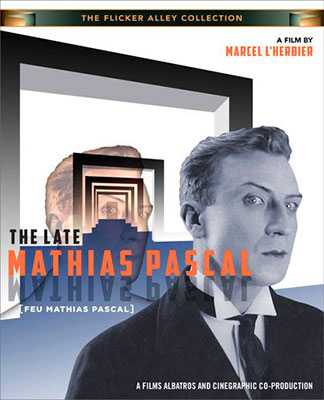 Even the most famous of silent movies are a specialized interest when it comes to home video. Apart from the comedies of Chaplin and Keaton or a few acknowledged landmarks of silent cinema (think Sunrise or Metropolis or Nosferatu), many movie fans view silent films as primitive or dull. Nothing could be farther from the truth. At its best, silent cinema is a pure kind of moviemaking that tells stories in images and metaphor. It’s a different kind of storytelling, but it is no less complex or evocative than the best of sound cinema.