Herman Melville’s novel Pierre, or the Ambiguities, was widely reviled when it was published, just as Leos Carax’s film of Pierre has been generally maligned. Melville’s book came along in the wide wake of a little thing called Moby-Dick, and even if it had not, it’s a very strange novel—seemingly a put-on of a certain kind of fruity romantic tale, but stretched past the point of parody. It’s weird, but interesting-weird.
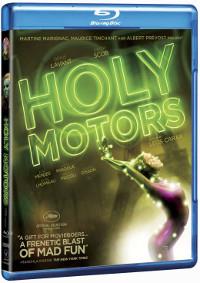
Holy Motors (Vivendi) is a film that almost defies description.
From its enigmatic opening scenes, which sends the viewers into a mysterious voyage a la Alice through the looking glass that ends up in a movie theater, Holy Motors is a celebration of the magic, imagination, and primal power of the movies.
Director Leos Carax celebrates his love (as well as his criticisms) of cinema in the modern world through an imagined culture of interactive theater that recreates moviemaking as private performance art pieces executed by freelance performers / directors for audiences unknown. Denis Lavant, the ugly/beautiful primal force of Les amants du Pont-Neuf and Beau Travail, is the committed actor, delivered from set to set in a long white limousine dressing room, the arts equivalent to the traveling office of Cronenberg’s Cosmopolis (I think there is a great double feature to be found here). He transforms from businessman to gnarled old beggar woman to street thug killer to depraved leprechaun troll and beyond, taking on a complete new persona with each costume change.
Behind these unrestrained journeys into all manner of mini-movies is an anxiety over the future of filmmaking and a fear of exhaustion (physical and creative) by the filmmakers, but the determination to keep creating these dreams and the sheer physical commitment to each performance is its own answer. Yet beyond that is the exhilaration of Carax’s flights of fantasy, from the visceral beauty of a motion-capture martial arts dance and gymnastic ballet of sexual congress to passionately overwrought melodramas that could have come out of the 1940s (Hollywood or France, take your pick) to hard-edged crime thrillers with wicked twists that call on us to provide our own backstory. There’s comedy, music, drama, thrills, tributes to the movies, legendary French actress Edith Scob, American beauty Eva Mendes, and Australian pop star Kylie Minogue, but mostly there is wonder and invention and the sheer thrill of cinematic creation. In the words of Lavant’s exhausted creator, it’s all about the beauty of the act, and these acts are nothing if not beautiful.
Blu-ray and DVD, in French with English subtitles (and brief sequences in English language). The Blu-ray also features the 47-minute documentary “Drive-In” with interviews and behind-the-scenes footage (in French with English subtitles) and an interview with Kylie Minogue (in English). Also available On Demand, on digital download, and VOD.
The Loneliest Planet (MPI), an American independent production shot overseas, stars Hani Furstenberg and Gael Garcia Bernal as a couple backpacking through the back country of Georgia in Eastern Europe, always making an effort to take the road less traveled. This road in this meandering, low-key film leads to an unexpected confrontation, and a startling reaction, that changes things irrevocably between them. Don’t fret if you don’t get any subtitles. We are as much in the dark as to what the locals are saying between themselves as our traveling couple. DVD, with a featurette and stills.
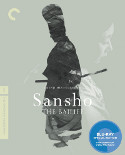
Sansho the Bailiff (Criterion), Kenji Mizoguchi’s masterful 1954 film, follows the ordeals of the wife and children of a provincial governor after they are sold into slavery by a vindictive feudal lord. Mizoguchi is the poet laureate of Japanese cinema, gracefully exploring the battered but resilient souls in the cruel worlds of Japan’s feudal past and present. His worlds are hard and unforgiving, the societies brutal, and within them he creates characters of tremendous grace. This is one of his greatest films, and it won the Silver Lion at the Venice Film Festival, his third win in three years.
Sansho is not the hero of Sansho the Bailiff, he’s a pitiless slave owner who metes out swift, unequivocal punishment to all slaves captured in escape attempts. The brother, Zushio (Yoshiaki Hanayagi) hardens over time, becoming tough and unfeeling as he obeys the hard commands of Sansho, but sister Anju (Kyôko Kagawa) remains kind and generous and sacrifices her freedom to save Zushio, which rekindles his knotty heart and soul and resolve. Kinuyo Tanaka, who plays the mother separated from her children and degraded by a life of prostitution. Mizoguchi was famed for his portraits of women. It’s not just about finding the saints among the sinners, but the rich lives of these concubines and wives and actresses and prostitutes, who are supposed to find their identity in the men of their lives and wind up forging their own rich interior lives, even as they wind up discarded by their own society.
Vancouver isn’t the critical/awards bellwether that Toronto or Venice or New York or even Telluride can claim to be, but this year its international line-up offers an interesting contrast in temperaments.
Mad Mikkelsen in ‘The Hunt’
On the one hand, there is the cinema of issues and big statements carried by a dour seriousness and emotional heaviness (one might say manipulation), defined in particular by Thomas Vinterberg’s The Hunt (Denmark/Sweden) and Michael Haneke’s Amour (France/Germany/Austria). On the other is the serious engagement of cinematic creativity and narrative mystery and surprise in Leos Carax’s Holy Motors (France/Germany) and Raul Ruiz’s Night Across the Street (Chile/France). Here the themes are not hammered into the skulls and skin of the audience but juggled through celebrations of joyous filmmaking and deft play with the possibilities of the medium.
Vinterberg’s The Hunt, a study in rumor and fear fueling self-righteous hysteria, and Haneke’s Amour, an unflinching, almost clinic portrait in the physical deterioration and emotional fallout of old age and debilitating illness), frame their subjects with a mix of objectivity and compassion, and then stack the decks to set out protagonists in opposition to the world. It’s not enough that they face such dire predicaments, but their allies all turn against them. In The Hunt, best friends turns their backs on Mads Mikkelsen, and in Amour, the daughter of the ailing old Emmanuelle Riva repeats clichés instead of educating herself on her condition or offering substantive help in caring for her.
Contains information related to marketing campaigns of the user. These are shared with Google AdWords / Google Ads when the Google Ads and Google Analytics accounts are linked together.
90 days
__utma
ID used to identify users and sessions
2 years after last activity
__utmt
Used to monitor number of Google Analytics server requests
10 minutes
__utmb
Used to distinguish new sessions and visits. This cookie is set when the GA.js javascript library is loaded and there is no existing __utmb cookie. The cookie is updated every time data is sent to the Google Analytics server.
30 minutes after last activity
__utmc
Used only with old Urchin versions of Google Analytics and not with GA.js. Was used to distinguish between new sessions and visits at the end of a session.
End of session (browser)
__utmz
Contains information about the traffic source or campaign that directed user to the website. The cookie is set when the GA.js javascript is loaded and updated when data is sent to the Google Anaytics server
6 months after last activity
__utmv
Contains custom information set by the web developer via the _setCustomVar method in Google Analytics. This cookie is updated every time new data is sent to the Google Analytics server.
2 years after last activity
__utmx
Used to determine whether a user is included in an A / B or Multivariate test.
18 months
_ga
ID used to identify users
2 years
_gali
Used by Google Analytics to determine which links on a page are being clicked
30 seconds
_ga_
ID used to identify users
2 years
_gid
ID used to identify users for 24 hours after last activity
24 hours
_gat
Used to monitor number of Google Analytics server requests when using Google Tag Manager
1 minute
Marketing cookies are used to follow visitors to websites. The intention is to show ads that are relevant and engaging to the individual user.
A video-sharing platform for users to upload, view, and share videos across various genres and topics.
Registers a unique ID on mobile devices to enable tracking based on geographical GPS location.
1 day
VISITOR_INFO1_LIVE
Tries to estimate the users' bandwidth on pages with integrated YouTube videos. Also used for marketing
179 days
PREF
This cookie stores your preferences and other information, in particular preferred language, how many search results you wish to be shown on your page, and whether or not you wish to have Google’s SafeSearch filter turned on.
10 years from set/ update
YSC
Registers a unique ID to keep statistics of what videos from YouTube the user has seen.
Session
DEVICE_INFO
Used to detect if the visitor has accepted the marketing category in the cookie banner. This cookie is necessary for GDPR-compliance of the website.
179 days
LOGIN_INFO
This cookie is used to play YouTube videos embedded on the website.


 Holy Motors (Vivendi) is a film that almost defies description.
 Blu-ray and DVD, in French with English subtitles (and brief sequences in English language). The Blu-ray also features the 47-minute documentary “Drive-In” with interviews and behind-the-scenes footage (in French with English subtitles) and an interview with Kylie Minogue (in English). Also available On Demand, on digital download, and VOD.
 Sansho the Bailiff (Criterion), Kenji Mizoguchi’s masterful 1954 film, follows the ordeals of the wife and children of a provincial governor after they are sold into slavery by a vindictive feudal lord. Mizoguchi is the poet laureate of Japanese cinema, gracefully exploring the battered but resilient souls in the cruel worlds of Japan’s feudal past and present. His worlds are hard and unforgiving, the societies brutal, and within them he creates characters of tremendous grace. This is one of his greatest films, and it won the Silver Lion at the Venice Film Festival, his third win in three years.
