The title may sound like a serial killer thriller but Mario Bava’s Kill, Baby… Kill (Italy, 1966) is a Gothic ghost story with haunting images, grotesque edges, and glorious style. Think of it as Bava’s answer to a Hammer horror, with hysterical superstition and suspicion of outsiders replacing the lurid sexuality of Hammer’s Victorian horrors and Bava’s rich palette setting an altogether more expressionist atmosphere.

Shooting exteriors on location in rural mountain villages of picture-postcard medieval stone dwellings and labyrinthine streets, Bava creates a fairy tale world of an oppressively provincial 19th century village in the grip of a curse. At least that’s the explanation of the townspeople who dismiss the scientific investigation of Dr. Paul Eswai (Giacomo Rossi Stuart), a coroner from the city called into determine if Irena (Mirella Pamphili), a young woman whose death by impaling opens the film, was murdered or committed suicide. The villagers know—she is the latest victim of a curse upon the village—and do everything they can to drive the coroner and Inspector Kruger (Piero Lulli), the city investigator, from their insular little village. With the help of Monica (Erika Blanc), who was born in the village but sent away to school and has recently returned, Paul is determined to find the true cause of the inexplicable deaths plaguing the village.


 The House on 92nd Street (Kino Lorber Studio Classics, Blu-ray), a 1945 World War II espionage thriller based on a real life FBI case, launched what would become the semi-documentary strain of film noir. It opens with the authoritative narration of Reed Hadley (uncredited but omnipresent in the genre) insisting on that this is an accurate dramatic treatment of a true story shot on locations where it occurred and slips into procedural about a German-American scientist (William Eythe) who is recruited by the Nazis for their bomb project and goes undercover for the FBI to find the mole giving A-bomb research to Germany. It’s produced by Louis de Rochemont (producer of the March of Time newsreel series) and directed by Henry Hathaway with a rather flat style, which isn’t helped by the blandness of Eythe or the archness of Lloyd Nolan as the lead agent. It’s an interesting film for all of its detail and location shooting and use of real FBI agents in minor roles and it launched the docu-noir style that was picked up and developed in films like T-Men (1947), The Naked City (1948), and Hathaway’s own Call Northside 777 (1948). Signe Hasso, Gene Lockhart, and Leo G. Carroll co-star.
 I Wake Up Screaming (Kino Lorber Studio Classics, Blu-ray) is not just one of the great movie titles of classic cinema, it is one of the films that established the distinctive style and attitude of film noir, from the blast of a headline shouting BEAUTIFUL MODEL FOUND MURDERED to the third degree given to swaggering sports promoter Frankie Christopher (Victor Mature) under the glare of a blinding lamp in a rather suspicious room of worn brick and cast-off furnishings, more of a cell than an official interrogation room. Mature is lit up in the center of the screen while hard shadows assault the walls and slashes of light and looming silhouettes give the cordon of cops wrapped around him a look more like intimidating mob hoods than New York’s finest. On the other side of the dungeon door is the public side of the detective’s room where Jill Lynn (Betty Grable), the victim’s sister, is treated more gently, but she’s just as trapped. When the camera swings around we see a cage around her. The picture opens with a punch and the backstory is quickly filled in with jabs of flashbacks, jumping back and forth between the smart mouthed dandy of a promotor and the demure young woman as they lay out the events leading up to the murder of ambitious Carole Landis, the hash slinger promoted to celebrity success by Mature like a noir Pygmalion.
 On Dangerous Ground (Warner Archive, Blu-ray) (1952), directed by Nicholas Ray from a script he developed with A.I. Bezzerides and producer John Houseman, opens on the urgent yet fractured dramatic score by Bernard Herrmann, a theme that rushes forward anxiously, pauses with quieter instruments, then jumps again as we watch the nocturnal city streets in the rain through the windshield of a moving car. This is the view of the city as seen by Jim Wilson (Robert Ryan), as an obsessive, tightly-wound police detective who works the night shift on the urban streets of an unnamed city filled with grifters, hookers, and petty crooks. He’s as dedicated as they come—he studies mug shots over his meal before the start of shift—but he has no family, no girl, no hobbies, as a quick survey of his Spartan apartment shows, and his single-minded focus on the job has twisted the compassion out of him. When his anger boils over into violence once too often, he’s sent out of town to help with a murder case in the rural countryside.
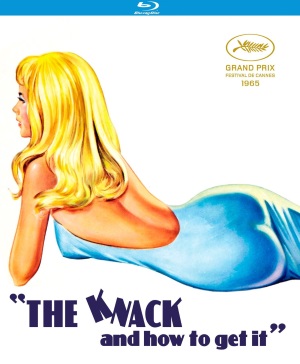 Why isn’t Richard Lester more celebrated? An American who made his home in England, Lester earned an Oscar nomination for The Running Jumping & Standing Still Film (1959), a lark he made with Peter Sellers and Spike Milligan and others, made his reputation as a fresh, innovative filmmaker with Beatles rock and roll romp A Hard Day’s Night (1964), and proved his versatility with the acidic drama Petulia (1968), the comic swashbucklers The Three Musketeers (1973) and The Four Musketeers (1974), and the melancholy Robin and Marian (1976).
 Just days after the final night in the Turner Classic Movies “Summer of Darkness” series—eight successive Fridays dedicated to film noir—comes the debut of four examples of the distinctly American film genre on Blu-ray, two of them making their first appearance on home video in any form in the U.S.
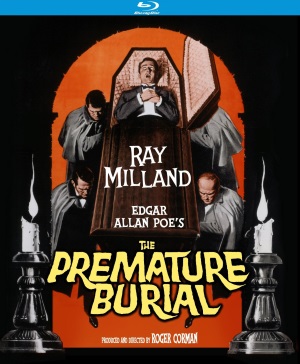 Vincent Price starred in all of Roger Corman’s Poe adaptations but one. Ray Milland took the lead in The Premature Burial (Kino Lorber Studio Classics, Blu-ray, DVD), playing Guy Carrell, an aristocrat with crippling fear that he will be buried alive due to a family history of catalepsy. Corman brings the fear home in the opening scene: an exhumation of an ancestor who shows every sign of having awoken in his casket. The obsession overtakes his life until the rather elderly newlywed moves into the family crypt, which he outfits as a Batcave of escape hatches, much to the horror of his neglected bride (Hazel Court), who observes that he has already “buried himself alive” and makes him chose the crypt or life with her.