Here Is Your Life (Criterion, Blu-ray, DVD), the 1966 feature debut of Swedish director Jan Troell, is ambitious by any measure: an epic (over two-and-a-half hours long) coming of age drama based on the semi-autobiographical novels by Nobel Prize-winning author Eyvind Johnson set in rural Sweden during the years of World War I.
It was also a response to the symbol-laden, psychologically heavy cinema of Ingmar Bergman, which was pretty much all the rest of the world knew about Swedish cinema in the early sixties. Here is Your Life, the feature debut of Jan Troell, was part of a new wave of Swedish cinema. Not quite Sweden’s answer to the nouvelle vague, it nonetheless ushered in young (or at least younger) filmmakers and different approaches, from the passionate romanticism of Bo Widerberg’s Elvira Madigan to the freewheeling intimacy of Vilgot Sjöman’s I Am Curious – Yellow, both 1967.
Framed in those terms, Here is Your Life is a fresh take on the classic historical drama. Olaf (Johnson’s stand-in, played by Eddie Axberg) is a mere 13 years old when he leaves the farm of his foster parents (sent there because his real parents are too poor to feed him) and sets out to make his own way in the world. The film follows him through his teenage years as he moves from job to job—he works at a lumber camp, a brick furnace, a sawmill, a movie theater, a travelling tent cinema, a carnival shooting booth, and maintaining the engines at a railroad yard—and schools himself by reading philosophy and attending socialist meetings.
Ingmar Bergman’s Wild Strawberries (1957) followed his sunny, airy sex comedy Smiles of a Summer Night (1955), the first Bergman film to catch the international spotlight, and the dark medieval allegory The Seventh Seal (1957), where a knight’s faith is shaken by the death and cruelty of the crusades and the doom of the Black Plague sweeping through his home. Set in the present but tied to a past viewed through the lens of remembrance and dream, Wild Strawberries is more melancholy and introspective than Smiles and more hopeful and self-reflective than the enigmatic Seal. It is also more autobiographical, with details of aging protagonist Isak Borg’s past drawn from Bergman’s own childhood. To what extent Isak or his emotionally closed in son Evald Borg (note the initials EB) represent Bergman himself is open to question (he claimed Evald was based on his father), but such concerns are secondary to the film itself, an often painful drama but one of Bergman’s warmest and most touching films.
Victor Sjöström, an actor and the great Swedish director of the silent era (and one of Bergman’s heroes), plays Isak Borg, a widowed doctor living a quiet retirement in a lovely country home. He was coaxed out of retirement to play the fragile old man being presented with an honorary doctorate in the college town of Lund, and Bergman pays tribute to the director in the opening sequences of the film. Isak has a nightmare where he wanders through a sun-seared yet ghostly village, and the silent movie-like sequence recalls Sjöström’s 1921 masterpiece The Phantom Carriage, with its driverless hearse carrying the corpse of Isak himself through the streets. It’s unlikely that audiences of the time would make the connection, which makes the moment even more touching: a personal gesture from one artist acknowledging his debt to another.
Ingmar Bergman’s reputation is built on a foundation of introspective human dramas and personal crises steeped in philosophical discussions, conversations that scrape tender emotions and troubled relationships laid bare. And yes, his career is filled with such cinema, much of it dark, most of it very serious and all of it (to a greater or lesser extent) exploring his ideas of drama, art, love and the complexities of human existence.
Yet the film that first brought Bergman to international attention in 1955 was neither dour nor dark. Smiles of a Summer Night is a light, sunny, airy sex comedy, like a Swedish version of a sly Lubitsch satire of love and class and sex by way of a Shakespeare comedy of mismatched couples reshuffled through the course of the film. It largely plays out at a weekend retreat in the country manor of beautiful (and somewhat notorious) stage actress Desiree (Eva Dahlbeck), or rather her worldly mother (Naima Wifstrand), something of a social courtesan in her day (“My dear daughter, I was given this estate for promising not to write my memoirs”).
She invites Fredrik (Gunnar Björnstrand), an old lover who has recently reconnected, along with his much, much younger wife (Ulla Jacobsson) and troubled son (Björn Bjelfvenstam), a divinity student with very worldly concerns, notably a tormenting attraction to his stepmom. To stir it up, she also invites her current lover, the married Count Carl Magnus Malcolm (Jarl Kulle), and his wife (Margit Carlqvist), who connives to help Desiree reshuffle the pairs to their desired outcome. Bringing the sextet up to an octet is Fredrik’s earthy young maid (Harriet Andersson) and Desiree’s hearty groom (Åke Fridell). While Desiree’s mother provides the witty commentary to the awkward dance, the unfettered attraction and physical indulgence of the servants offers a refreshing simplicity to love and sex beyond these social creatures.
It’s all very warm and witty and played like an elegant stage farce, with Bergman’s usual introspection recast through witticisms and banter. The men are egotistical fools (“I can tolerate my wife’s infidelity, but if anyone touches my mistress, I become a tiger”) and the women worldly veterans of disappointing loves (apart from the girlish young wife, still a virgin and an optimist). But there is also a vulnerability in the aging Fredrik, who adores his young wife but yearns for a grown-up relationship (and a sex life), and to Desiree, tired of a life of temporary affairs and shared lovers. While she’s the glamorous (and perhaps notorious) star on tour, she seeks stability and comfort at home, where she is also mother to a young son (named Fredrik, much to the adult Fredrik’s alarm… and perhaps pride). It’s a very human comedy, built on the fragility of ego, the confusion of desire and the wonderful illogic of love.
Criterion originally released the film to DVD in 2004. The Blu-ray debut includes the supplements originally presented with that release: a video introduction by director Ingmar Bergman, a video conversation with film historian Peter Cowie and writer Jorn Donner (who was the executive producer on Bergman’s “Fanny and Alexander’) and the original Swedish theatrical trailer. The 24-page booklet features an essay by theater and film critic John Simon and a reprint of Pauline Kael’s 1961 review. You can read them both in their entirety at the Criterion Current: John Simon here and Pauline Kael here.
Contains information related to marketing campaigns of the user. These are shared with Google AdWords / Google Ads when the Google Ads and Google Analytics accounts are linked together.
90 days
__utma
ID used to identify users and sessions
2 years after last activity
__utmt
Used to monitor number of Google Analytics server requests
10 minutes
__utmb
Used to distinguish new sessions and visits. This cookie is set when the GA.js javascript library is loaded and there is no existing __utmb cookie. The cookie is updated every time data is sent to the Google Analytics server.
30 minutes after last activity
__utmc
Used only with old Urchin versions of Google Analytics and not with GA.js. Was used to distinguish between new sessions and visits at the end of a session.
End of session (browser)
__utmz
Contains information about the traffic source or campaign that directed user to the website. The cookie is set when the GA.js javascript is loaded and updated when data is sent to the Google Anaytics server
6 months after last activity
__utmv
Contains custom information set by the web developer via the _setCustomVar method in Google Analytics. This cookie is updated every time new data is sent to the Google Analytics server.
2 years after last activity
__utmx
Used to determine whether a user is included in an A / B or Multivariate test.
18 months
_ga
ID used to identify users
2 years
_gali
Used by Google Analytics to determine which links on a page are being clicked
30 seconds
_ga_
ID used to identify users
2 years
_gid
ID used to identify users for 24 hours after last activity
24 hours
_gat
Used to monitor number of Google Analytics server requests when using Google Tag Manager
1 minute
Marketing cookies are used to follow visitors to websites. The intention is to show ads that are relevant and engaging to the individual user.
A video-sharing platform for users to upload, view, and share videos across various genres and topics.
Registers a unique ID on mobile devices to enable tracking based on geographical GPS location.
1 day
VISITOR_INFO1_LIVE
Tries to estimate the users' bandwidth on pages with integrated YouTube videos. Also used for marketing
179 days
PREF
This cookie stores your preferences and other information, in particular preferred language, how many search results you wish to be shown on your page, and whether or not you wish to have Google’s SafeSearch filter turned on.
10 years from set/ update
YSC
Registers a unique ID to keep statistics of what videos from YouTube the user has seen.
Session
DEVICE_INFO
Used to detect if the visitor has accepted the marketing category in the cookie banner. This cookie is necessary for GDPR-compliance of the website.
179 days
LOGIN_INFO
This cookie is used to play YouTube videos embedded on the website.


 Here Is Your Life (Criterion, Blu-ray, DVD), the 1966 feature debut of Swedish director Jan Troell, is ambitious by any measure: an epic (over two-and-a-half hours long) coming of age drama based on the semi-autobiographical novels by Nobel Prize-winning author Eyvind Johnson set in rural Sweden during the years of World War I.
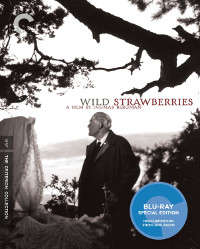 Ingmar Bergman’s Wild Strawberries (1957) followed his sunny, airy sex comedy Smiles of a Summer Night (1955), the first Bergman film to catch the international spotlight, and the dark medieval allegory The Seventh Seal (1957), where a knight’s faith is shaken by the death and cruelty of the crusades and the doom of the Black Plague sweeping through his home. Set in the present but tied to a past viewed through the lens of remembrance and dream, Wild Strawberries is more melancholy and introspective than Smiles and more hopeful and self-reflective than the enigmatic Seal. It is also more autobiographical, with details of aging protagonist Isak Borg’s past drawn from Bergman’s own childhood. To what extent Isak or his emotionally closed in son Evald Borg (note the initials EB) represent Bergman himself is open to question (he claimed Evald was based on his father), but such concerns are secondary to the film itself, an often painful drama but one of Bergman’s warmest and most touching films.

 Smiles Of A Summer Night (Criterion)