David Lynch, the once boyish maverick of underground visions and the nightmares under the façade of normalcy, turned 65 this week. A little older, a little grayer but still making films the only way he knows how: on his own terms. I had the good fortune to interview Lynch a few years ago, when he financed, produced and distributed Inland Empire outside the studio system. “It’s mostly common sense making films,” he explained. “If you can get your film into a theater, that’s all you need. And now you can make your own DVDs. If you have a conduit to stores, you put them down that conduit. Again, it’s a lot of common sense.”
Laura Dern in ‘Inland Empire.’ Photo credit: Absurda
I’ll chime in by picking out five more of my favorite Lynch films (plus his paradigm-changing TV series as a bonus) from thirty years of filmmaking: his strangest, most visionary and most perversely beautiful journeys through the curdled brick road of his mind. And all available on home video, in some cases in DVD releases produced by Lynch himself.
Eraserhead (1977) (Absurda)
“In heaven, everything is fine,” but in Eraserhead nothing is fine. It’s grim, disturbed, mutated, claustrophobic, a world that appears to be unraveling—or, more accurately, decaying—before our eyes. Jack Nance stars as the doughy, dim husband who escapes his grimy, droning life by watching the icky mutant cabaret that plays under his radiator. That’s as clear a description of the plot you’re bound to get. This is an existence where dinner squirms to get away as it’s being carved up and the newborn offspring of a dumbstruck couple is a freaky chicken baby that mewls and cries until it drives the maternal impulses right out of its horrified mother. Lynch shot the film over the course of a year with a loyal cast and crew that, at times, lived with Lynch on the very set of the film. There was nothing like it when it emerged in 1977 and became the quintessential midnight movie experience. See today, it is pure, primordial Lynch: a nightmare world of industrial slums and alienated folk, set to a soundtrack of noise that gets under your skin, your nails and your skull. Robert Cumbow came as close to anyone in capturing the experience in a review he wrote in 1978: “This is what madness might be like, he makes you think, this oppressive absurdity, now funny, now scary, now just plain weird, but making a kind of sense that has nothing at all to do with reason.”
It’s fitting that Lynch’s first feature, which he produced independently, is also the first DVD that he produced through his own label, Absurda. He personally supervised the transfer and the digital master and he participated in the documentary featurette “Stories,” which is centered around Lynch discussing the making of the film. For most directors this wouldn’t be anything special, but Lynch had quite conspicuously made himself absent from the supplements of studio-produced DVDs of his work in the past. This was the first time he recorded an interview specifically for the home video release of one of his films. It apparently was painless enough, for it wasn’t his last.
[Originally published May 1999 in the Seattle Weekly]
This year, the Seattle International Film Festival celebrates 25 years. OK, let’s be real—this is really only the 24th festival. Somewhere between 1987 (the 12th Annual SIFF) and 1988 (the 14th) we jumped a year: a leap festival, I suppose, but if skyscrapers can skip the 13th floor, why shouldn’t a festival have the same option? I say, “Any excuse for a celebration!” And SIFF has plenty to celebrate.
“At the first Seattle Film Festival, they had a sneak preview one night during the week, and there were very few people in the theater. I don’t think there were a dozen people, and it turned out the film was The Rocky Horror Picture Show. One reason you go to a film festival is to see something that you’ve never heard of and have no idea what it’s going to be and hopefully you’re just bowled over by it. I remember for days afterwards trying to explain to friends what The Rocky Horror Picture Show was.”
WADE SOWERS, SIFF series passholder and festival-goer since 1976
In 1976, Darryl Macdonald and Dan Ireland, partners in the Moore-Egyptian theater, put together 13 films on a two-week program, and the Seattle International Film Festival was inaugurated. This was long before Cinema Seattle was created: The festival was completely underwritten by the Moore-Egyptian and was a true labor of love. The first festival opened with The Lost Honor of Katharina Blum by Volker Schlondorff and Margarethe von Trotta, and featured Fassbinder’s Fox and his Friends, Bunuel’s The Phantom of Liberty, Verhoeven’s Cathy Tippel, and The Rocky Horror Picture Show. The next year it more than doubled, and in 1979 hosted its first debuts: 11 American premieres and the world premiere of Alien. In the meantime, Dan and Darryl were exploring Dutch cinema, and SIFF soon became the premier American showcase of the emerging films of the Netherlands. In 1980, after featuring his work in the first three festivals, SIFF dedicated its third retrospective to the work of Paul Verhoeven, and in 1983 his kinky thriller The Fourth Man, which turned out to be his international breakthrough film, opened the festival with its American debut.
“I have all these memories of people they brought to the festival: Michael Powell and Robert Wise and Stanley Donen and so many filmmakers big and small who nobody would have seen without the festival bringing them. And that means a lot to filmmakers who live here. Unless we travel a lot to New York or LA, we feel kind of cut off from the rest of the world, and I think the festival provides us with a link to other filmmakers and other films that we wouldn’t see otherwise. I can’t tell you the number of times where I’ve just been sitting in the audience with some filmmaker that’s brought their film. They may not be someone famous, but I love to hear their story, I love to hear how they got the money, how their vision came about, the obstacles they faced, some of the cool things that happened to them. Even if you don’t get to meet them, just seeing them in the same room with you gives you hope.”
JANICE FINDLAY, local filmmaker and festival-goer since 1979
Sigourney Weaver in ‘Alien’
Over the years, SIFF has introduced dozens of world premieres and hundreds of American premieres, some of which went on to critical acclaim and popular success, many of which disappeared from the public consciousness. But then Seattle has never been a prestige festival like Cannes or New York or Toronto or the much younger Sundance, where filmmakers fight for the international exposure they bring. Critics and producers fly from all over the world to see these high-profile exhibitions culled from a pool of the cinematic elite. SIFF has grown into the biggest festival in the country because of community. The 25-day span is just too much for an out-of-town critic or fearless out-of-state film buff to cover, but it gives local residents plenty of time to sample their share of world cinema without having to take a vacation (not that that’s stopped a few driven souls from doing just that, and you can often pick them out of the passholders line by their bleary eyes and massively scribbled schedules). Last year, more than 135,000 tickets were sold, and those were by and large, according to SIFF, to Seattle filmgoers.
“I remember being absolutely knocked out the night of Wim Wender’s The American Friend (SIFF 1978). That was one of those where the talk went well into the evening. I remember a grand time the evening that Ivan Passer was there to present Cutter’s Way (SIFF 1981). And I remember William Everson’s amazing collection of pre-Hayes code films. This was years before Warner Bros. put together their package (called “Forbidden Hollywood”), and he had a lot of films that Warner didn’t.”
GREG OLSON, SAM programmer and festival-goer since 1976
In a city that has no Cinemateque or year-round noncommercial repertory venue, SIFF becomes ever more important as a lifeline to the rich array of cinema that never secures an American release. Past festivals have offered everything from the underground cinema of George Kuchar and Curt McDowell, early exposure to the films of “Beat” Takeshi Kitano (including three films that have yet to secure either a theatrical or video release), to Julio Medem (his debut, Vacas, makes a return visit this year as a “Flashback”), and of course to countless American independent films. Seattle’s heyday as a Hong Kongmovie-mad town finds its roots in such festival showings as The Butterfly Murders (SIFF 1980) and Banana Cop (SIFF 1985). A quick survey through the years finds such remarkable films as Our Hitler (SIFF 1980), Poto and Cabengo (SIFF 1981), and Jeanne Dielman, 23 Quai De Commerce (SIFF 1983) among others, which never secured theatrical runs and have yet to be released on video.
“I remember being there when the Australian new wave hit, being there when John Sayles showed Return of the Secaucus Seven (SIFF 1980), being there when Max Havelaar (SIFF 1977) and Soldier of Orange (SIFF 1978) and the Dutch new wave hit. Going through each new wave as they came through, you felt like you were there.”
STEPHANIE OGLE, proprietor, Cinema Books, and festival-goer since 1977
Listing the films that took off and became major hits or cult classics makes for the most impressive festival stories but not necessarily the most vivid SIFF memories. It’s that lone screening of an unforgettable film that never appeared again, or that rare big-screen showing of an archival oddity, or the electricity of a director answering a question—perhaps your question—about a film that has delighted, enraged, or simply impressed you, that’s SIFF to me.
“In 1981, they had a double bill of the Claude Lelouche film Second Chance with Catherine Deneuve and Anouk Aimee, followed by George Romero’s Knightriders. My son was 12 and he wanted to see Knightriders and my wife really loves foreign films, but at the time the thought of seeing a George Romero motorcycle movie was just more than she could bear. But since one was at 7 and one was at 9:30, they each had to go to both of them. It was my son’s first foreign-language film and now he’s a foreign-language film buff, and my wife was so overwhelmed by Romero’s Knightriders that she realized why I go to the festival—so I can see something that’s totally unlike what I’m used to seeing. From that festival on, she started purchasing a full-series pass because if she could be so surprised by something like Knightriders she didn’t want to take a chance on missing something like that again.”
WADE SOWERS
Rutger Hauer and the cast of ‘Soldier of Orange.’
SIFF timeline
1976: The first festival features 13 films at the Moore-Egyptian.
1978: Stanley Kramer is honored in the festival’s first retrospective.
1979: The 81 films include the world premiere of Ridley Scott’s Alien, plus 11 US premieres.
1980: Paul Verhoeven honored, along with the most concentrated collection of Dutch cinema to date.
1981: SIFF programs 100 films and outgrows its single venue, the Moore (making its final festival appearance), and branches out into the newly remodeled Egyptian Theater, to this day the flagship of SIFF.
1983: The Secret Fest is born (don’t tell anyone).
1985: The Golden Space Needle Awards are inaugurated, one of the few audience-determined awards in the world of film festivals. The first Best Film winner: Kiss of the Spider Woman.
1986: Fons Rademakers wins Golden Space Needle in the American inaugural showing of The Assault. It went on to win the Oscar for Best Foreign Film.
1989: The Michael Powell retrospective, perhaps the most fondly remembered tribute in the history of SIFF.
1990: Cinema Seattle is born.
1995: Opening night film is the world premiere of Mel Gibson’s Braveheart, which went on to win the Oscar for Best Picture. He forgets to mention that in his acceptance speech, but Seattleites are pleased just the same.
1996: SIFF co-creator Dan Ireland returns to open the festival with his directorial debut: the acclaimed The Whole Wide World. The Filmmakers’ Forum is created.
1997: Bill Condon wins the Golden Space Needle Award for Best Director for Gods and Monsters. He went on to pick up the Oscar for Best Adapted Screenplay for the same film.
For over 25 years, the San Francisco Silent Film Festival called the Castro Theatre home. With the iconic theater now closed for a year-plus-long renovation, SFSFF has relocated to the Palace of Fine Arts Theatre, located in a beautiful park created for the 1915 Panama-Pacific International Exposition at the north edge of the Presidio. The auditorium, primarily a performance space, seats nearly a thousand and features a spacious foyer where passholders could visit and relax between shows (particularly useful on chilly weekends).
SFSFF prides itself on mixing landmark productions and audience favorites with rediscoveries, revelations, and rarities, often recently uncovered and restored. And for its 27th edition this year, the festival presented 20 features and six short films over five days, all with live musical scores by some of the finest silent film accompanists in the world.
The opening night film, Albert Parker’s 1926 swashbuckler The Black Pirate, certainly qualifies as both landmark and favorite. This rousing adventure, starring Douglas Fairbanks as the genial gentleman pirate, was shot on full-sized ships that give it a tremendous scope. It was also a groundbreaking experiment in Technicolor filmmaking, only the fourth feature shot entirely in color, and it was presented in a brand new restoration mastered from original camera negatives and a wealth of original archival prints. For the first time ever, the distinctive palette of the two-strip technology was accurately recreated for modern audiences.
We welcome 2024 with one last look back at the best releases of 2023.
As most of us are no longer full-time critics, we haven’t had the same access to films as most film critics. Thus these are snapshots of what we have been able to see, and what impressed us over the last year. We’ve also invited a few old friends to join the group this year.
Also, among those we lost in 2023 was Bruce Reid, former film critic at The Stranger and longtime Parallax View partner, contributor, and friend.
Contributors listed in reverse alphabetical orders. Films listed in preferential orders (unless otherwise noted).
Ten Favorite Films of 2023 (listed alphabetically)
Asteroid City Barbie The Boy and the Heron Four Daughters Fremont May December No Bears (released in Seattle in February 2023) Showing Up Society of the Snow The Wonderful Story of Henry Sugar
Are You There God? It’s Me, Margaret Barbie The Holdovers Killers of the Flower Moon Maestro Oppenheimer Past Lives Sam Now Stop Making Sense You Hurt My Feelings
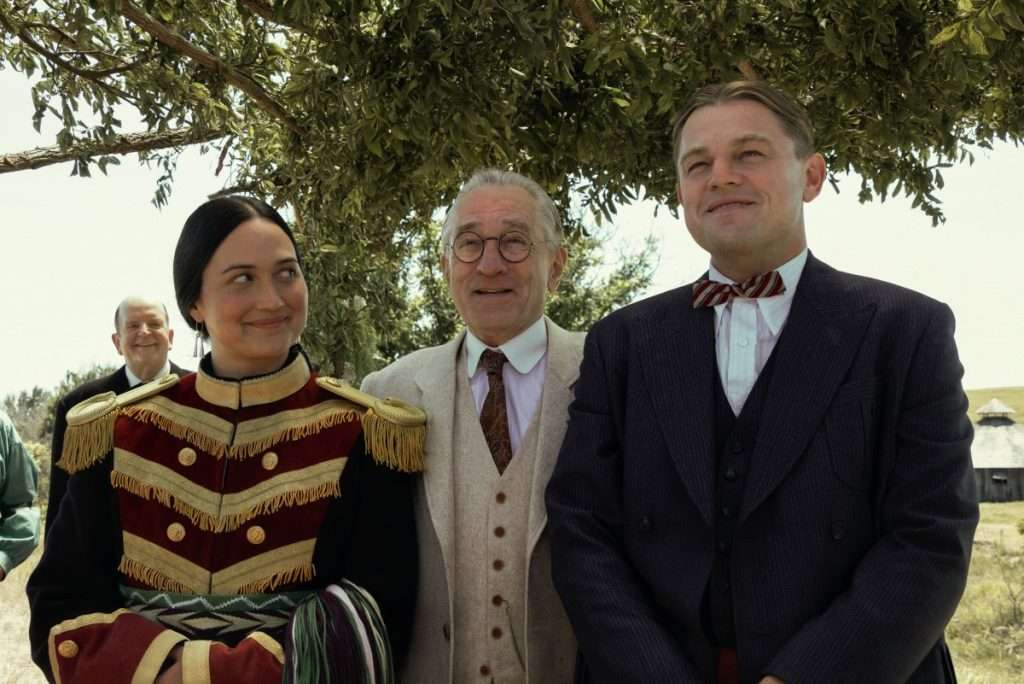
Lily Gladstone, Robert De Niro, and Leonardo DiCaprio in ‘Killers of the Flower Moon.’ Photo credit: Apple Studios
Richard T. Jameson
Top ten in alphabetical order:
All Dirt Roads Taste of Salt All of Us Strangers Anatomy of a Fall Fallen Leaves The Holdovers Killers of the Flower Moon Oppenheimer Past Lives Showing Up The Zone of Interest
Not to scorn Ferrari, Saltburn, You Hurt My Feelings, Barbie, May December, American Fiction, Poor Things, John Wick: Chapter 4, Knock at the Cabin, Maestro, The Killer, Fingernails, Nyad
Top Tier: Fallen Leaves (Aki Kaurismäki) Showing Up (Kelly Reichardt) Pacifiction (Albert Serra) All Dirt Roads Taste of Salt (Raven Jackson) All of Us Strangers (Andrew Haigh)
Second Tier: Anatomy of a Fall (Justine Trier) Killers of the Flower Moon (Martin Scorsese) A Thousand and One (A.V. Rockwell) Tori and Lokita (Jean-Pierre and Luc Dardenne) The Zone of Interest (Jonathan Glazer)
Out of the 10, but Extremely Close Tier: Walk Up (Hong Sang-soo), Maestro (Bradley Cooper), Asteroid City (Wes Anderson), The Holdovers (Alexander Payne), R.M.N. (Cristian Mungiu), Reality (Tina Satter)
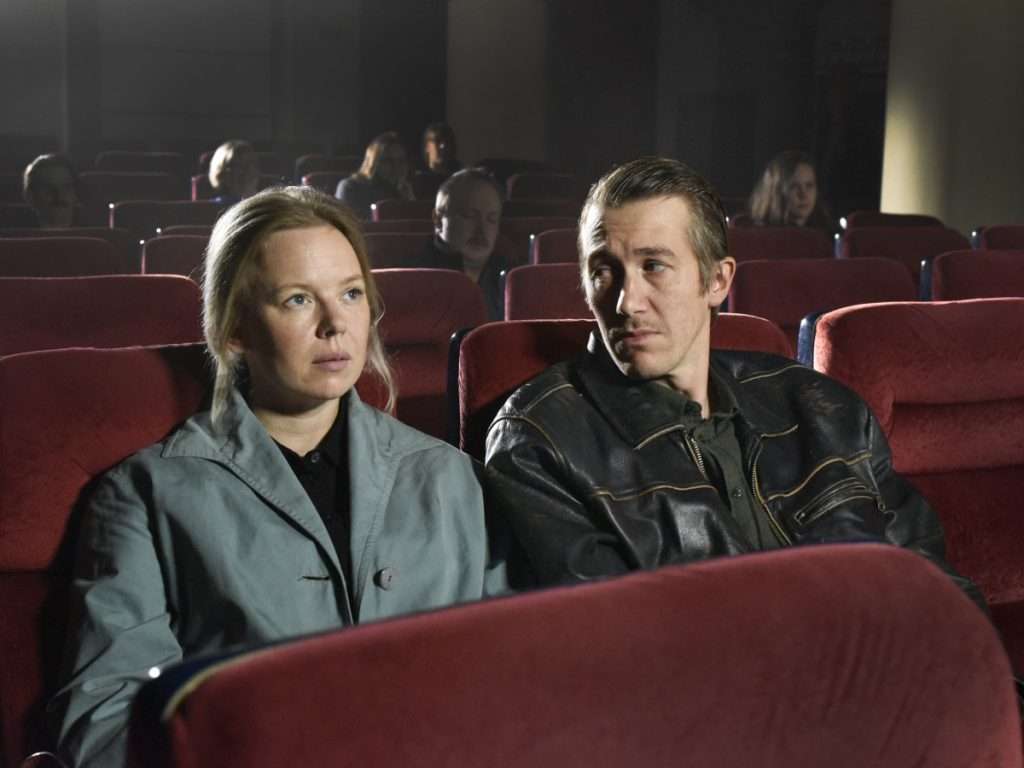
Alma Pöysti and Jussi Vatanen in ‘Fallen Leaves.’ Photo credit: MUBI
Top 10 1. Showing Up (Kelly Reichardt) 2. Fallen Leaves (Aki Kaurismäki) 3. Afire (Christian Petzold) 4. A Thousand and One (A.V. Rockwell) 5. The Holdovers (Alexander Payne) 6. May December (Todd Haynes) 7. Enys Men (Mark Jenkin) 8. Rye Lane (Raine Allen-Miller) 9. The Five Devils (Léa Mysius) 10. Fremont (Babak Jalali)
Runners-up 11. Killers of the Flower Moon (Martin Scorsese) 12. Oppenheimer (Christopher Nolan) 13. Priscilla (Sofia Coppola) 14. Barbie (Greta Gerwig) 15. Asteroid City (Wes Anderson) 16. Past Lives (Celine Song) 17. The Killer (David Fincher) 18. All of Us Strangers (Andrew Haigh) 19. Anatomy of a Fall (Justine Triet) 20. Return to Seoul (Davy Chou)
David Coursen
Films listed roughly in tiers
All Dirt Roads Taste of Salt (Raven Jackson) Anselm (Wim Wenders) Killers of the Flower Moon (Martin Scorsese)
The Master Gardener (Paul Schrader) Saint Omer (Alice Diop) No Bears (Jafar Panahi) May December (Todd Haynes)
The Holdovers (Alexander Payne) Oppenheimer (Christopher Nolan) Barbie (Greta Gerwig)
Honorable Mention: American Fiction (Cord Jefferson), Showing Up (Kelly Reichardt), Asteroid City (Wes Anderson), Turn Every Page (Lizzie Gottlieb), Fallen Leaves (Aki Kaurismaki), Strange Way of Life (Pedro Almodovar)
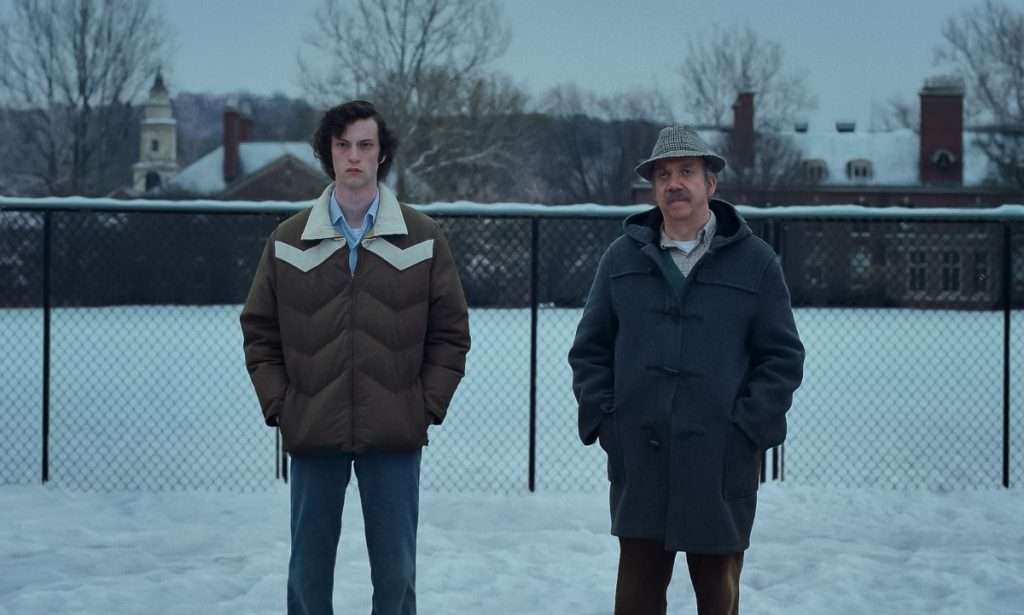
Dominic Sessa and Paul Giamatti in ‘The Holdovers.’ Photo credit: Focus Features
Best: (But It Goes to 11…): 1. Past Lives (Celine Song) 2. Revoir Paris (Alice Winocour) 3. You Hurt My Feelings (Nicole Holofcener) 4. John Wick Chapter 4 (Chad Stahelski) 5. Carmen (Benjamin Millepied) 6. Godzilla Minus One (Takashi Yamazaki) 7. Anselm (Wim Wenders) 8. Fallen Leaves (Aki Kaurismaki) 9. Are You There, God? It’s Me, Margaret (Kelly Fremon Craig) 10. Infinity Pool (Brandon Cronenberg) 11. Showing Up (Kelly Reichardt)
Next Ten: Ferrari (Michael Mann), The Night Of The 12th (Dominik Moll), It Ain’t Over (Sean Mullin), Oppenheimer (Christopher Nolan), No Hard Feelings (Gene Stupnitsky), Talk To Me (Danny Philippou, Michael Philippou), May December (Todd Haynes), Guardians of the Galaxy Vol. 3 (James Gunn), Barbie (Greta Gerwig), M3gan (Gerard Johnstone)
Best Revival: Stop Making Sense (In IMAX) (1984) (Jonathan Demme)
The Worst (In Descending Order): Ant-Man And The Wasp: Quantumania (Peyton Reed), 80 For Brady (Kyle Marvin), Holy Spider (Ali Abbasi), The Exorcist: Believer (David Gordon Green), Asteroid City (Wes Anderson)
Still to See: Poor Things, American Fiction, Maestro, Napoleon, Monster, 1946: The Mistranslation That Shifted Culture
1. All of Us Strangers (Andrew Haigh) 2. Perfect Days (Wim Wenders) 3. Killers of the Flower Moon (Martin Scorsese) 4. R.M.N. (Cristian Mungiu) 5. Poor Things (Yorgos Lanthimos) 6. Oppenheimer (Christopher Nolan) 7. Showing Up (Kelly Reichardt) 8. The Holdovers (Alexander Payne) 9. American Fiction (Cord Jefferson) 10. Barbie (Greta Gerwig)
Ten honorable mentions (in alphabetical order): Afire (Christian Petzold), Anatomy of a Fall (Justine Triet), The Eight Mountains (Felix van Groeningen and Charlotte Vandermeersch), Fallen Leaves (Aki Kaurismaki), Fair Play (Chloe Domont), Maestro (Bradley Cooper), Origin (Ava DuVernay), Past Lives (Celine Song), A Thousand and One (V.A. Rockwell), You Hurt My Feelings (Nicole Holofcener)
Ten films that made filmgoing fun in 2023: Asteroid City (Wes Anderson), Bottoms (Emma Seligman), The Boy and the Heron (Hayao Miyazaki), Godzilla Minus One (Takashi Yamazaki), John Wick: Chapter 4 (Chad Stahelski), Lola (Andrew Legge), Polite Society (Nida Manzoor), Saltburn (Emerald Fennell), Spider-Man: Across the Spiderverse (Joaquim Dos Santos, Kemp Powers, and Justin K. Thompson)
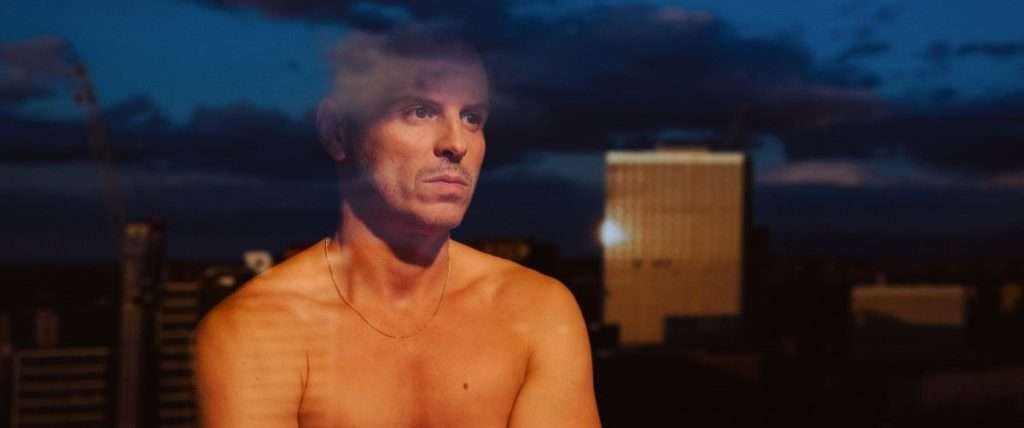
Andrew Haigh in ‘All of Us Strangers.’ Photo credit: Photo credit: Searchlight Pictures
Meet John Doe: 70th Anniversary Ultimate Collector’s Edition (VCI)
Frank Capra’s last feature before leaving Hollywood to contribute his filmmaking talents to the war effort is his most populist piece of social commentary, a cynical satire of a publicity stunt that turns into a popular political movement.
Barbara Stanwyck is equal parts street-smart spunk and ferocious ambition as Ann Mitchell, a newspaper columnist swept out with the rest of the staff when a new owner takes over and leaves a kiss-off piece that starts a ruckus, drives sales and puts her in a prime position to negotiate a new contract, providing she keeps delivering her voice-of-the-people. Gary Cooper is at his laconic, everyman best as former minor league pitcher Long John Willoughby, now a homeless, unemployed drifter hired to play the role of Ann’s fictional John Doe, the voice of the people whose “letters” she writes for the paper. He becomes the public voice, his lazy delivery, lanky body language and homespun spirit giving her words an authenticity that raises the depressed spirits of struggling Americans and sparks a spontaneous grass roots movement.
Film noir historians trace the roots back to the silent era and the full flowering to the war years, but most tend to agree that the first true American film noir came in the otherwise modest package of an ambitious B-movie crime thriller from 1940. Before the hard-boiled world of suspicious private eyes, double-crossing dames and a nocturnal urban jungle where deals and double-crosses are hatched with often fatal payoffs of The Maltese Falcon, and the slippery narrative and visual expressionism of Citizen Kane (an influence on the genre and a close relative if not actually a member of the immediate noir family), there was Stranger on the Third Floor, a paranoid murder thriller that, for all of its budgetary constraints, took viewers on a spiral of justified paranoia. This odyssey into the dark side of American life begins with the hopeless and helpless cries of innocence from a kid convicted of murder on circumstantial evidence and the apathy of a judge and jury (Elisha Cook Jr., soon to become a minor noir icon, delivers the appeals with a haunting plea and eyes watery with abject terror) and builds to a literal nightmare with images right out of the height of 1920 German Expressionist classics.
Plenty has been written about the nightmare sequence, which explodes out of the increasingly oppressive atmosphere created by director Boris Ingster and cinematographer Nicholas Musuraca (who became RKO’s house specialist for shadowy crime cinema and went on to shoot one of the greatest masterpieces of the genre, the sublime Out of the Past) and the guilty conscience of suddenly self-doubting newspaper reporter Mike Ward (John McGuire) as much as the paranoid twists of the Frank Partos’ screenplay. As many historians have written, the stylized sequence of stark settings created largely by massive shadows thrown across a blank canvas of a screen dressed with exaggerated props was the first American expression of this distinctly German style (which, coincidentally, had since fallen out of favor under the Third Reich’s control of the German film industry). 70 years and scores of stylized noir offers later, it is still impressive and effective and not just for its evocation of paranoid nightmare or psychological terror. This sequence effectively replays the ordeal that hapless Joe Briggs (Elisha Cook) endures in the opening act, but this time around with Mike—the star witness for the prosecution—in his position, grilled by the cops and marched off to execution in a resigned, lifeless lockstep shuffle that echoes the worker slaves of Metropolis.
The 26th San Francisco Silent Film Festival was another joyous gathering of silent cinema fans, historians, scholars, and all stripes of movie buffs. Launched in 1995, the festival has grown from a single-day event to—excluding two years of Covid shutdowns—an annual, five-day celebration. It’s about the movies, of course, and this year SFSFF presented 20 features and seven shorts. But it’s also about the silent movie experience. All shows were accompanied by live music, from solo piano to small combos to a 10-piece mini-orchestra for the closing-night event, playing both archival music and original scores, many composed for the screenings.
Allan Dwan’s The Iron Mask, from 1929, opened the festival with a bittersweet farewell to the silents. The film, the swashbuckling final silent feature to star Douglas Fairbanks, has added resonance for SFSFF audiences because of the legacy of the Castro Theatre, the festival’s home for its entire 26 years. The new owners of the movie palace in the heart of the Castro district have controversially chosen to remove the seats and level the floor to turn it into a concert venue, which would effectively end its suitability as a screening space.
In many ways, The Iron Mask’s selection was a fitting farewell, as Fairbanks’s older kind of hero is shaped by loss and disappointment but still driven by duty and honor and, of course, friendship, to fight the good fight one last time. The final images are at once joyous and melancholic, a celebration of what has been accomplished as the end comes.
A belated welcome to 2023 with one last look back at the best releases of 2022.
As most of us are no longer full-time critics, and many other are understandably wary about seeing movies in theaters at the moment, we haven’t had the same access to films as most film critics. Thus these are snapshots of what we have been able to see, and what impressed us over the last year.
Also, among those we lost in 2022 were friends and fellow film critics John Hartl, whose love of cinema defined the Seattle Times film coverage for his 38 year-tenure as the paper’s head film critic, and Sheila Benson, who was (among other achievements) the chief film critic for the Los Angeles Times from 1981 to 1991 before moving north and making Seattle her home.
Contributors listed in reverse alphabetical orders. Films listed in preferential orders (unless otherwise noted).
Sean Axmaker
EO (Poland, Jerzy Skolimowski)
Women Talking (Sarah Polley)
No Bears (Iran, Jafar Panahi)
Everything Everywhere All at Once (Daniels, aka Dan Kwan and Daniel Scheinert)
Tár (Todd Field)
The Quiet Girl (Ireland, Colm Bairéad)
Broker (South Korea, Hirokazu Koreeda)
The Fabelmans (Steven Spielberg)
Crimes of the Future (David Cronenberg)
Athena (France, Romain Gavras)
Honorable mentions: All the Beauty and the Bloodshed (Laura Poitras), The Banshees of Inisherin (Martin McDonagh), Decision to Leave (South Korea, Park Chan-wook), Kimi (Steven Soderbergh), Marcel the Shell With Shoes On (Dean Fleischer-Camp), The Menu (Mark Mylod), The Outfit (Graham Moore), RRR (India, S.S. Rajamouli), She Said (Maria Schrader), Saint Omer (France, Alice Diop)
And these films made my year in viewing more fun: Barbarian (Zach Cregger), Catherine Called Birdy (Lena Dunham), Dead for a Dollar (Walter Hill), Glass Onion: A Knives Out Mystery (Rian Johnson), The Northman (Robert Eggers), Vengeance (B.J. Novak), X (Ti West)
David Coursen (Washington, D.C.)
Adjusted for inflation and in alphabetical order:
Top Tier: Both Sides of the Blade (Claire Denis) Holy Spider (Ali Abbasi)
Rest of the Best: Ahed’s Knee (Nadav Lapid) Ballad of a White Cow (Behtash Sanaeeha and Maryam Moqadam) Benediction (Terrence Davies) Boy from Heaven (Tarik Saleh) Hero (Asghar Farhadi) Hive (Blerta Basholli) Hit the Road (Panah Panahi) In Front of Your Face (Hong Sang-soo) Master (Mariama Diallo) Memoria (Apichatpong Weerasethakul) R.M.N. (Cristian Mungiu)
Honorable Mention: Armageddon Time (James Gray) Happening (Audrey Diwan) Nope (Jordan Peele) Till (Chinone Chukwu)
‘Tár’ Photo credit: Florian Hoffmeister / Focus Features
Robert Cumbow
No “Top Ten” or “Best” lists for me again this year. As always I prefer to just note my favorites (and acknowledge my limitations):
FAVORITE FILMS OF 2022 Vengeance Tár The Outfit Crimes of the Future Dead for a Dollar
PROPS TO: The Banshees of Inisherin Everything Everywhere All At Once X Barbarian The Menu
APOLOGIES TO THESE THAT MIGHT MAKE THE LIST BUT I HAVEN’T SEEN THEM YET: Blonde The Fabelmans Marcel the Shell with Shoes On Elvis Decision to Leave Something in the Dirt
Kathy Fennessy
EO (Jerzy Skolimowski)
Decision to Leave (Park Chan-wook)
Benediction (Terence Davies)
Crimes of the Future (David Cronenberg)
Lost Illusions (Xavier Giannoli)
Happening (Audrey Diwal)
Aftersun (Charlotte Wells)
X (Ti West)
Great Freedom (Sebastian Meise)
Compartment Number 6 (Juho Kuosmanen)
‘Crimes of the Future.’ Photo credit: Nikos Nikolopoulos / Serendipity Point Films
Robert Horton
Top tier: Crimes of the Future (David Cronenberg). Happening (Audrey Diwan). The Eternal Daughter (Joanna Hogg). Tár (Todd Field).
Second tier: The Quiet Girl (Colm Bairéad). The Banshees of Inisherin (Martin McDonagh). Hit the Road (Panah Panahi). In Front of Your Face (Hong Sang-soo). EO (Jerzy Skolimowski). Watcher (Chloe Okuno).
Third tier: Utama (Alejandro Loayza Grisi). The Fabelmans (Steven Spielberg). Aftersun (Charlotte Wells). Close (Lukas Dhont). Three Minutes: A Lengthening (Bianca Stigter). Murina (Antoneta Alamat Kusijanovic). Benediction (Terence Davies).
The 2022 movie I regarded as the best for most of the year was Watcher, the debut feature of Chloe Okuno — a film of Hitchcockian intelligence with no need to strew Hitchcock hommages.
The movie that now claims top line of my list is Jerzy Skolimowski’s EO, the kind of film with the power to adjust the world.
The 2022 movies I love most are The Banshees of Inisherin, by Martin McDonagh, and Steven Spielberg’s The Fabelmans.
In alphabetical order, the remainder of my Ten Best are: Broker (Hirokazu Kore-eda) Dead for a Dollar (Walter Hill) Decision to Leave (Park Chan-wook) Happening (Audrey Diwan) No Bears (Jafar Panahi) Tár(Todd Field).
I also want to highlight the extraordinary beauty and power of Taylor Sheridan’s ten-part streaming series 1883.
Moira Macdonald (Seattle Times)
(in alphabetical order) The Banshees of Inisherin Everything Everywhere All at Once Tár Turning Red
[Originally published on TCM.com on November 19, 2007]
Jean-Luc Godard, arguably the most important film director of the 1960s, began the decade with his feature debut Breathless, a scrappy, free-spirited, cinematically audacious take on the B-movie crime genre. By the end of the sixties, he had all but rejected commercial cinema for politically pointed commentaries and film essays like Sympathy For the Devil and Le Gai Savoir.
Smack in the middle of the genre goofing and cinematic game-playing of Godard’s earlier sixties film and the consumer satire and cultural deconstructions of his late sixties films lies Pierrot le Fou (1965). Not that there was some sudden turn in direction; Godard embraced both sides throughout and they blur in so many films of this era. But Pierrot feels like a perfect midpoint (whether or not you could even objectively measure such a thing) in the way that it bounces between the flippant play of moviemaking fun and the social commentary on the modern world.
Pierrot le Fou is a road movie, a crime fantasy, a cultural satire, a tale of consumerist alienation and bourgeois apathy, and a femme fatale noir in Technicolor and CinemaScope, shot in the bright sunlit canvas of broad daylight. Jean-Paul Belmondo, star of Breathless, plays Ferdinand, a former teacher pushed into an advertising career by a wealthy wife with high-society values: “You’ll do as your told,” she demands as they get ready for a party where she hopes he will be offered a job, and he bristles at the empty life he inhabits, escaping only through his books. Anna Karina, Godard’s one-time muse and wife (their divorce became final before the shoot was over), is Marianne Renoir, niece of Ferdinand’s brother-in-law and the family babysitter.
Early in the career of Jean-Luc Godard career, when he still the firebrand film critic aspiring to make features, Godard contemplated the “Mystery and fascination of this American cinema” and found himself bedeviled by an unshakable realization: “How can I hate John Wayne upholding Goldwater and yet love him tenderly when abruptly he takes Natalie Wood into his arms in the last reel of The Searchers?”
Forty years later, he’s still pondering the question in Histoire(s) du cinema (1989), his epic rumination on cinema as industry and art. In eight episodes and four-and-a-half hours, Godard struggles between his conflicting perspectives on cinema: on the one hand an industrialized business that cranks out products designed to sell images, consumer goods and an entire ideology, and on the other, a history of images, stories and experiences that haunt the soul and stand with the great works of art.
Histoire(s) du cinema is not, strictly speaking, a history of cinema, at least not in a traditional documentary sense. The title provides the first hint. In French, “histoire” means both “history” and “story” and the (s) suggests the multiple histories and stories involved in any understanding of cinema, not the least of which is Godard’s complicated personal connection to film history. From passionate young critic staking out his position in the fifties to maverick director who shook up the staid French industry with provocative films to political commentator and social critic exploring the frontiers of expression and representation, he has been nothing if not provocative. The personal and political are constantly in flux in this collection of eight video essays, begun in 1988 and concluded in 1998, where the Nouvelle Vague legend considers the history of the movies with a typically idiosyncratic style and non-linear train of thought.
Contains information related to marketing campaigns of the user. These are shared with Google AdWords / Google Ads when the Google Ads and Google Analytics accounts are linked together.
90 days
__utma
ID used to identify users and sessions
2 years after last activity
__utmt
Used to monitor number of Google Analytics server requests
10 minutes
__utmb
Used to distinguish new sessions and visits. This cookie is set when the GA.js javascript library is loaded and there is no existing __utmb cookie. The cookie is updated every time data is sent to the Google Analytics server.
30 minutes after last activity
__utmc
Used only with old Urchin versions of Google Analytics and not with GA.js. Was used to distinguish between new sessions and visits at the end of a session.
End of session (browser)
__utmz
Contains information about the traffic source or campaign that directed user to the website. The cookie is set when the GA.js javascript is loaded and updated when data is sent to the Google Anaytics server
6 months after last activity
__utmv
Contains custom information set by the web developer via the _setCustomVar method in Google Analytics. This cookie is updated every time new data is sent to the Google Analytics server.
2 years after last activity
__utmx
Used to determine whether a user is included in an A / B or Multivariate test.
18 months
_ga
ID used to identify users
2 years
_gali
Used by Google Analytics to determine which links on a page are being clicked
30 seconds
_ga_
ID used to identify users
2 years
_gid
ID used to identify users for 24 hours after last activity
24 hours
_gat
Used to monitor number of Google Analytics server requests when using Google Tag Manager
1 minute
Marketing cookies are used to follow visitors to websites. The intention is to show ads that are relevant and engaging to the individual user.
A video-sharing platform for users to upload, view, and share videos across various genres and topics.
Registers a unique ID on mobile devices to enable tracking based on geographical GPS location.
1 day
VISITOR_INFO1_LIVE
Tries to estimate the users' bandwidth on pages with integrated YouTube videos. Also used for marketing
179 days
PREF
This cookie stores your preferences and other information, in particular preferred language, how many search results you wish to be shown on your page, and whether or not you wish to have Google’s SafeSearch filter turned on.
10 years from set/ update
YSC
Registers a unique ID to keep statistics of what videos from YouTube the user has seen.
Session
DEVICE_INFO
Used to detect if the visitor has accepted the marketing category in the cookie banner. This cookie is necessary for GDPR-compliance of the website.
179 days
LOGIN_INFO
This cookie is used to play YouTube videos embedded on the website.




 .