[Originally published in Movietone News 42, July 1975]
I liked The French Connection a lot in 1971, but I’m rather afraid to look at it again because I think I remember most of what’s there. Not that I don’t remember many other films vividly, films I’ve no doubt I can revisit any number of times and find them and me enriched every time. But there’s something about the feel of the first French Connection, the strategy of the film as a film, that makes me suspect I’ve savored most of what it had to offer—and that was no meager portion—during my two first-run visits. FrenchConnection II isn’t as functionally perfect as its predecessor, but I suspect—stress, again, suspect—that its interstices leave contemplative room I might occupy again with profit. Put it another way: FrenchConnection (I) struck me as a brilliant package film, a producer’s picture in which director, screenwriter, cameraman, editor, et al. were hitting their marks with breathtaking precision and enough originality that cries of “Manipulation!” seemed silly—indeed, ungrateful. FC-II, sequel or no, comes off as more of a felt work, and what I make contact with through it is a director.
A belated welcome to 2025 with one last look at the best releases of 2024
Most of us at parallax View are no longer actively reviewing new films but we still try to keep up with them. And after decades of making lists like this, it’s still part of our routine. So while, even halfway through January 2025, we are still catching up on some of the most celebrated films of 2024, we can’t help ourselves. Though far from definitive, please enjoy our picks for the best films of 2024.
Contributors in alphabetical order. Films list in preferential order (unless otherwise noted).
Sean Axmaker
1. The Brutalist (Brady Corbet) 2. All We Imagine as Light (Payal Kapadia) 3. His Three Daughters (Azazel Jacobs) 4. The Seed of the Sacred Fig (Mohammed Rasoulof) 5. Anora (Sean Baker) 6. A Complete Unknown (James Mangold) 7. Flow (Gints Zilbalodis) 8. Green Border (Agnieszka Holland) 9. Love Lies Bleeding (Rose Glass) 10. The Substance (Coralie Fargeat)
Runners-up: Challengers (Luca Guadagnino), Cuckoo (Tilman Singer), The Dead Don’t Hurt (Viggo Mortensen), Do Not Expect Too Much from the End of the World (Radu Jude), Hit Man (Richard Linklater), Juror #2 (Clint Eastwood), A Real Pain (Jesse Eisenberg), Rebel Ridge (Jeremy Saulnier), Strange Darling (JT Mollner), Woman of the Hour (Anna Kendrick)
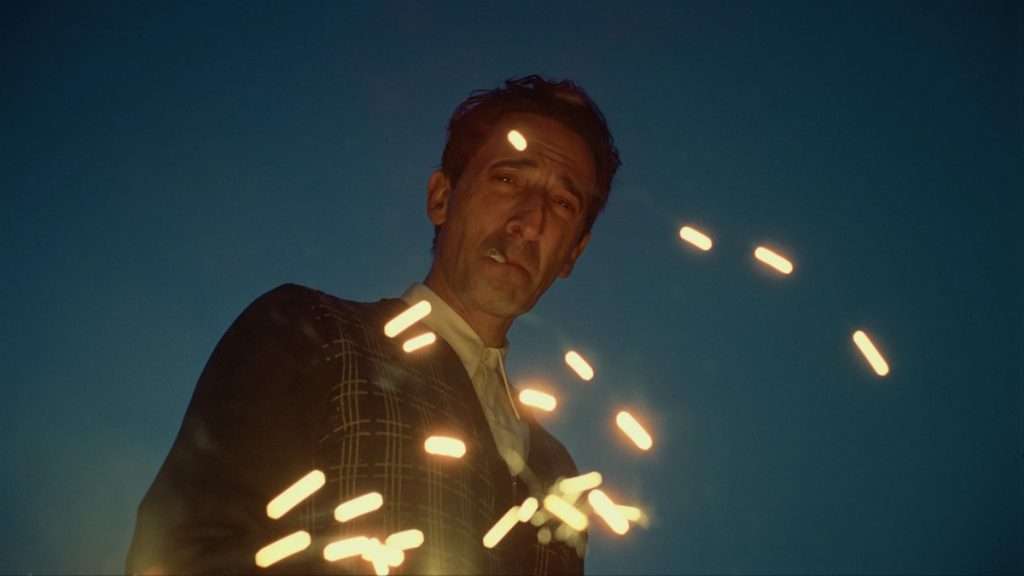
Adrien Brody in ‘The Brutalist.’ Photo credit: A24
Dennis Cozzalio
My usual baker’s dozen of end-of-the-year picks features an actual Baker this year, so what a way to start! I have not yet had the opportunity to see such highly touted year-end powerhouses as All We Imagine as Light, Nickel Boys, The Brutalist or Hard Truths, though Sing Sing and The Room Next Door are both on my dance card for this weekend, a couple days after the deadline to submit this list. As with every year’s list, this one seems to change from moment to moment, so it only seems like business as usual, with those six in mind as possible spoilers for the ones that did make my list of 13 Favorites of 2024, that this list might look entirely different at the end of the coming weekend, or a week or from now. But this is what it looks like at 6:44 a.m. on Thursday, January 16, 2025. I have attempted to rank them, but in all honesty, only the top three are in any way carved in granite as far as their placement on the list goes. The remaining ten could be reshuffled in as many ways mathematically as they could be reshuffled. What matters is that they are all there.
My Baker’s Dozen Favorites of 2025 1. The Beast (Bertrand Bonello) 2. Flow (Gints Zilbalodis) 3. La Chimera (Alice Rohrwacher) 4. Anora (Sean Baker) 5. His Three Daughters (Azazel Jacobs) 6. Hundreds Of Beavers (Mike Cheslik) 7. The Old Oak (Ken Loach) 8. Small Things Like These (Tim Mielants) 9. Furiosa: A Mad Max Saga (George Miller) 10. Kinds of Kindness (Yorgos Lanthimos) 11. Last Summer (Catherine Breillat) 12. September 5 (Tim Fehlbaum) 13. Ghostlight (Alex Thompson, Kelly O’Sullivan)
In so many ways 2024 has been a terror, but as far as movies go it has good enough that another list of ten easily populates the world of my honorable mentions. In any other less bountiful year, any of these (listed alphabetically) might have made my baker’s dozen.
A Complete Unknown (James Mangold), A Real Pain (Jesse Eisenberg), Challengers (Luca Guadagnino), Conclave (Edward Berger), Daddio (Christy Hall), The First Omen (Arkasha Stevenson), Heretic (Scott Beck, Bryan Woods), Hit Man (Richard Linklater), Juror #2 (Clint Eastwood), My Old Ass (Megan Park)
Documentaries I Enjoyed Most: The Disappearance Of Shere Hite (2023) (Nicole Newnham), Ghost: Rite Here Rite Now (Tobias Forge, Alex Ross Perry), Made In England: The Films of Powell And Pressburger (David Hinton), Rainier: A Beer Odyssey (Isaac Olsen), Yacht Rock: A Dockumentary (Garret Price)
And Every Year Has Its Dregs (In Descending Order From Best-Worst To Worst-Worst): Gladiator 2 (Ridley Scott) Tired, dull and pointless. Denzel ashington is, as widely reported, the best thing in it, and he’s still not very good. Trap (M. Night Shyamalan) Substitute “C” for “T.” The movie that answers the question, “What would it be like to see Hayley Mills taser a shirtless serial killer nearly half her age. Answer: not as enticing as it might sound, which is a reasonable response to the whole dumb movie itself. Joker: Folie A Deux (Todd Phillips) A “fuck you” to the same audience Phillips courted all the way to the Oscars before, but it has no passion for its own conceits, especially the musical numbers. The Front Room (Max Eggers, Sam Eggers) Ugliest display of fear of the elderly I’ve seen in a movie in quite some time. And Brandy Norwood can’t act. Deadpool & Wolverine (Shawn Levy) Marvel eats itself.
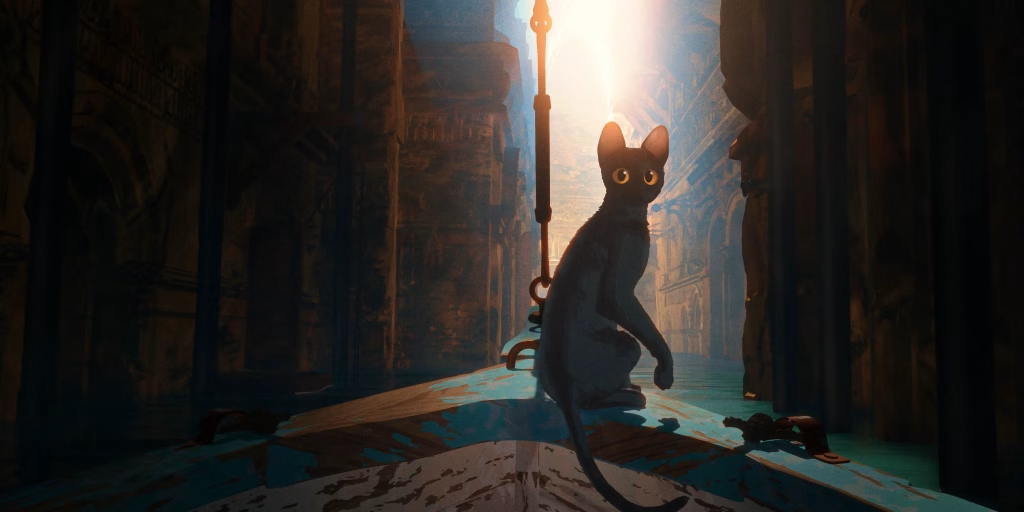
Flow. Photo credit: Janus Films
David Coursen
1. The Nickel Boys (RaMell Ross) 2. Seed of the Sacred Fig (Mohammad Rasoulof) 3. Green Border (Agnieszka Holland) 4. All We Imagine as Light (Payal Kapadia) 5. Evil Does Not Exist (Ruyusuke Hamaguchi) 6. Hard Truths (Mike Leigh) 7. The Substance (Coralie Fargeat) 8. Dahomey (Mati Diop) 9. Fire Within, A Requiem for Katia and Maurice Krafft (Werner Herzog) 10. (tie) The People’s Joker (Vera Drew) Witches (Elizabeth Sankey)
Top tier: Nickel Boys (RaMell Ross) Last Summer (Catherine Breillat) Green Border (Agnieska Holland) All We Imagine as Light (Payal Kapadia) His Three Daughters (Azazel Jacobs)
Veteran Virtuosity tier: Hard Truths (Mike Leigh) Juror #2 (Clint Eastwood) Hit Man (Richard Linklater) Trap (M. Night Shyamalan)
Wild + Crazy Virtuosity tier: Emilia Pérez (Jacques Audiard) Do Not Expect Too Much from the End of the World (Radu Jude) Anora (Sean Baker) The Substance (Coralie Fargeat) The Brutalist (Brady Corbet)
Strong Enough to Honor tier: A Complete Unknown (James Mangold) Kinds of Kindness (Yorgos Lanthimos) Sing Sing (Greg Kweder) Nightbitch (Marielle Heller)
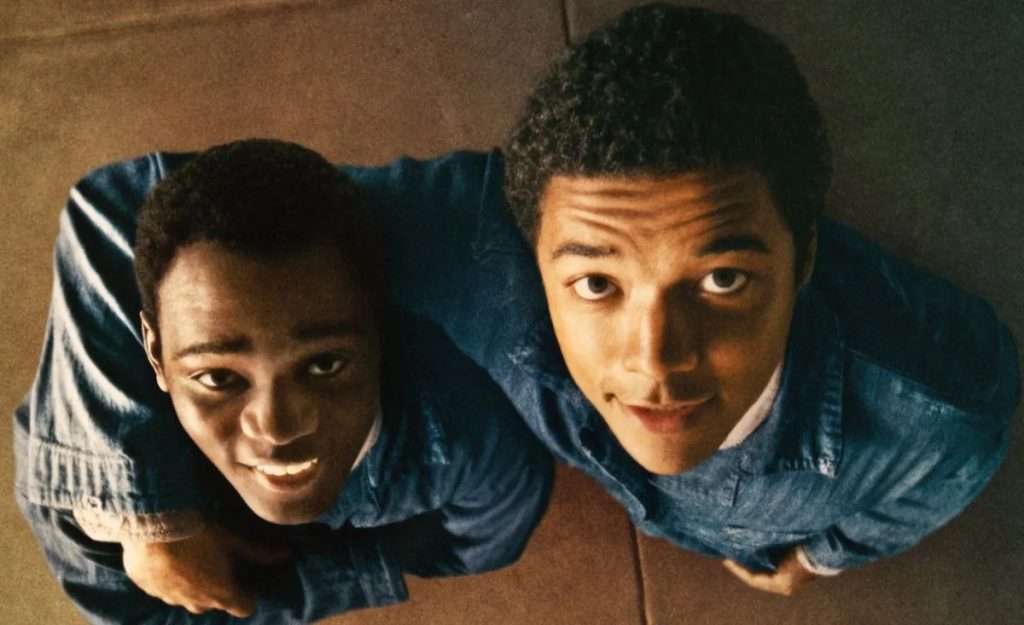
Sam Malone and Ethan Herisse in ‘Nickel Boys.’ Photo credit: Amazon MGM Studios
Richard T. Jameson
Not for the first time, I spent the greater part of a film year with a Netflix miniseries poised ahead of everything else on a potential “best things seen on screen” list: Steven Zaillian’s mesmerizing Ripley. In spirit, it’s still there. As for mere movies, here’s an alphabetical Ten (or so) Best.
All We Imagine as Light Anora The Brutalist Evil Does Not Exist Flow His Three Daughters Juror No. 2 Last Summer… Nickel Boys Strange Darling The Substance
Least celebrated also-rans: The Animal Kingdom, The Dead Don’t Hurt, Handling the Undead, Horizon (part one), Monkey Man, Rebel Ridge
Moira Macdonald
Favorite Films of 2024, listed alphabetically (as published in The Seattle Times): The Crime Is Mine Evil Does Not Exist His Three Daughters Hit Man Nickel Boys A Real Pain Sweetheart Deal The Taste of Things Wicked
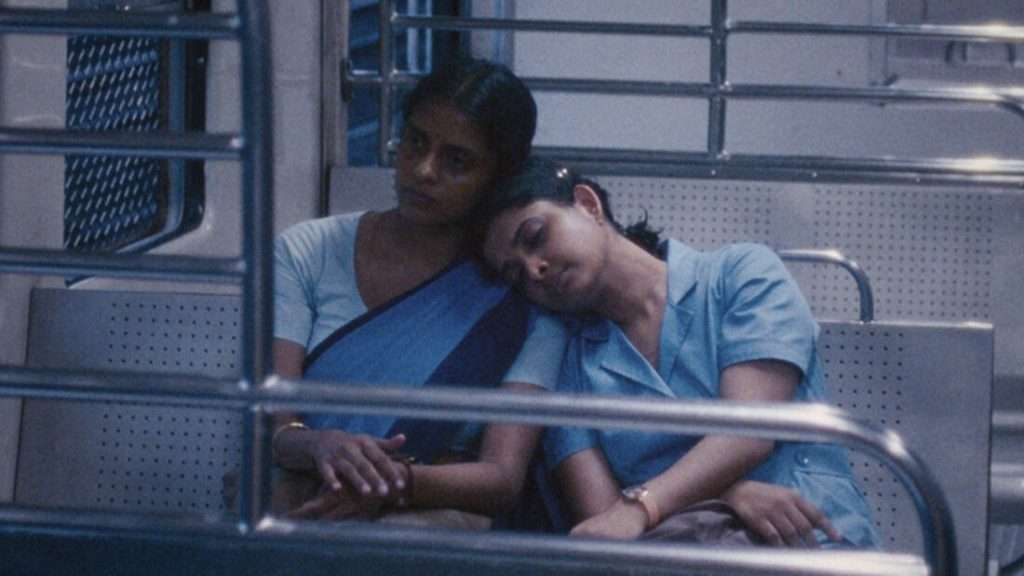
Kani Kusruti and Divya Prabha in ‘All We Imagine as Light.’ Photo credit: Janus Films
[Originally published in Movietone News 23, May-June 1973]
Pat Garrett and Billy the Kid vies with The Ballad of Cable Hogue as Sam Peckinpah’s most personal film. Not that Ride the High Country, Major Dundee, The Wild Bunch, Straw Dogs, Junior Bonner, The Getaway, or even that compromised early project The Deadly Companions could have been made by any other man. But those films at least flirt with conventional notions of how movies are built, notions derived from viewing other men’s work. Pat Garrett and Billy the Kid is thoroughly perverse in conception and realization—and in its refusal (several people have remarked it independently) to get out of one’s skull the day after one has seen it, and the day after that. It is not my intention, here, to do much more than to record my astonishment, admiration, and awe, and (since it has been graced by a particularly contemptible, willfully misrepresentative review in the local evening paper) to urge anyone who cares for movies to see the picture at the earliest opportunity. M-G-M hasn’t so much released the film as set it outside the company vault and wait to see whether some passerby notices; it opened locally at two drive-ins and a plaza twin in Bellevue. Impatient moviegoers are warned: aside from the generally known fact that Sheriff Pat Garrett was somehow involved in the death of William H. Bonney, alias Billy the Kid, the viewer has nothing to go on but his faith in the eventual emergence of a narrative; characters appear, seem to be known to the other characters, are not pointedly introduced or given time to develop the sort of identity we normally expect from a motion picture inhabitant, and may in fact die before we’re clear on who they were or why they appeared in the first place (though often we learn much more about them later, from the effect their absence has). Violence-baiters are also admonished: this is possibly Peckinpah’s bloodiest film, certainly the most carcass-strewn since The Wild Bunch; virtually every sequence is built around a killing, usually more than one.
[Originally published in The Weekly, March 26, 1986]
“When I wrote the script it was never as exotic. It was more a straightforward kind of movie. Which it still is. It just takes longer to get straight.”
That’s Alan Rudolph talking about his movie TroubleinMind, which he wrote “with Seattle in mind” and shot here a year ago this month. How well you take to its exoticism and how patiently you wait for the straightforwardness to assert itself will depend on your tolerance of, or enthusiasm for, Rudolph’s highly stylized brand of filmmaking. I happen to consider him one of the most dynamic, and certainly most distinctive, of modern American filmmakers, and find that his latest feature combines the haunt and vibrancy of ChooseMe with the fleetness and wit of Songwriter. That opinion may be disputed. What no one will dispute is that TroubleinMind makes more exciting use of Seattle as a movie location than any other film ever shot here.
[Originally published in Movietone News 26, October 1973]
During one phase of their rising-and-falling marriage Susan Anspach says to George Segal, “We’re always putting somebody down.” One of the conspicuously consistent things about Paul Mazursky’s three films as a director—BobandCarol andTedandAlice, Alexin Wonderland, BlumeinLove—is that he doesn’t put anybody down. The frantic chicness of the assumed lifestyles in B&C&T&A was the source of many laughs, but there was a winning innocence about the whole enterprise, on the characters’ part and on Mazursky’s, that saved the film from the sterile socioaesthetic oneupmanship that claims most endeavors in that risky genre. It was the director’s innocence that sustained Alex in Wonderland even amid the protracted, slavish, unimaginative gaucherie of those sub-Fellini pastiches and stillborn “Hooray for Hollywood” highjinks. And the colors of innocence and naïveté continue to fly in his latest film, and they help make Blume in Love a distinct pleasure to behold and share.
We welcome 2024 with one last look back at the best releases of 2023.
As most of us are no longer full-time critics, we haven’t had the same access to films as most film critics. Thus these are snapshots of what we have been able to see, and what impressed us over the last year. We’ve also invited a few old friends to join the group this year.
Also, among those we lost in 2023 was Bruce Reid, former film critic at The Stranger and longtime Parallax View partner, contributor, and friend.
Contributors listed in reverse alphabetical orders. Films listed in preferential orders (unless otherwise noted).
Ten Favorite Films of 2023 (listed alphabetically)
Asteroid City Barbie The Boy and the Heron Four Daughters Fremont May December No Bears (released in Seattle in February 2023) Showing Up Society of the Snow The Wonderful Story of Henry Sugar
Are You There God? It’s Me, Margaret Barbie The Holdovers Killers of the Flower Moon Maestro Oppenheimer Past Lives Sam Now Stop Making Sense You Hurt My Feelings
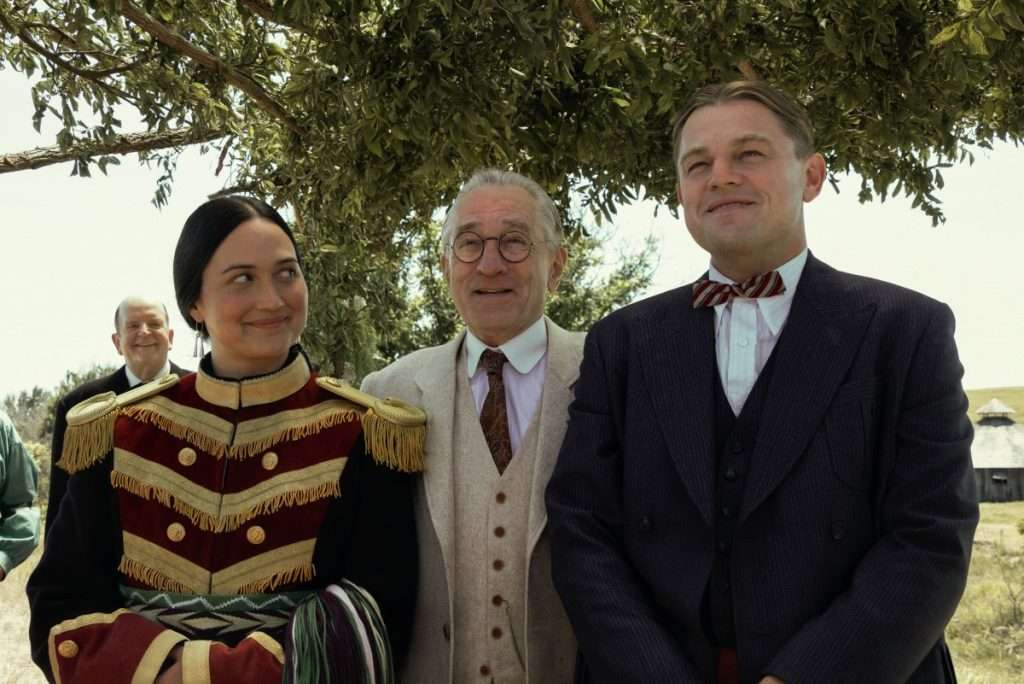
Lily Gladstone, Robert De Niro, and Leonardo DiCaprio in ‘Killers of the Flower Moon.’ Photo credit: Apple Studios
Richard T. Jameson
Top ten in alphabetical order:
All Dirt Roads Taste of Salt All of Us Strangers Anatomy of a Fall Fallen Leaves The Holdovers Killers of the Flower Moon Oppenheimer Past Lives Showing Up The Zone of Interest
Not to scorn Ferrari, Saltburn, You Hurt My Feelings, Barbie, May December, American Fiction, Poor Things, John Wick: Chapter 4, Knock at the Cabin, Maestro, The Killer, Fingernails, Nyad
Top Tier: Fallen Leaves (Aki Kaurismäki) Showing Up (Kelly Reichardt) Pacifiction (Albert Serra) All Dirt Roads Taste of Salt (Raven Jackson) All of Us Strangers (Andrew Haigh)
Second Tier: Anatomy of a Fall (Justine Trier) Killers of the Flower Moon (Martin Scorsese) A Thousand and One (A.V. Rockwell) Tori and Lokita (Jean-Pierre and Luc Dardenne) The Zone of Interest (Jonathan Glazer)
Out of the 10, but Extremely Close Tier: Walk Up (Hong Sang-soo), Maestro (Bradley Cooper), Asteroid City (Wes Anderson), The Holdovers (Alexander Payne), R.M.N. (Cristian Mungiu), Reality (Tina Satter)
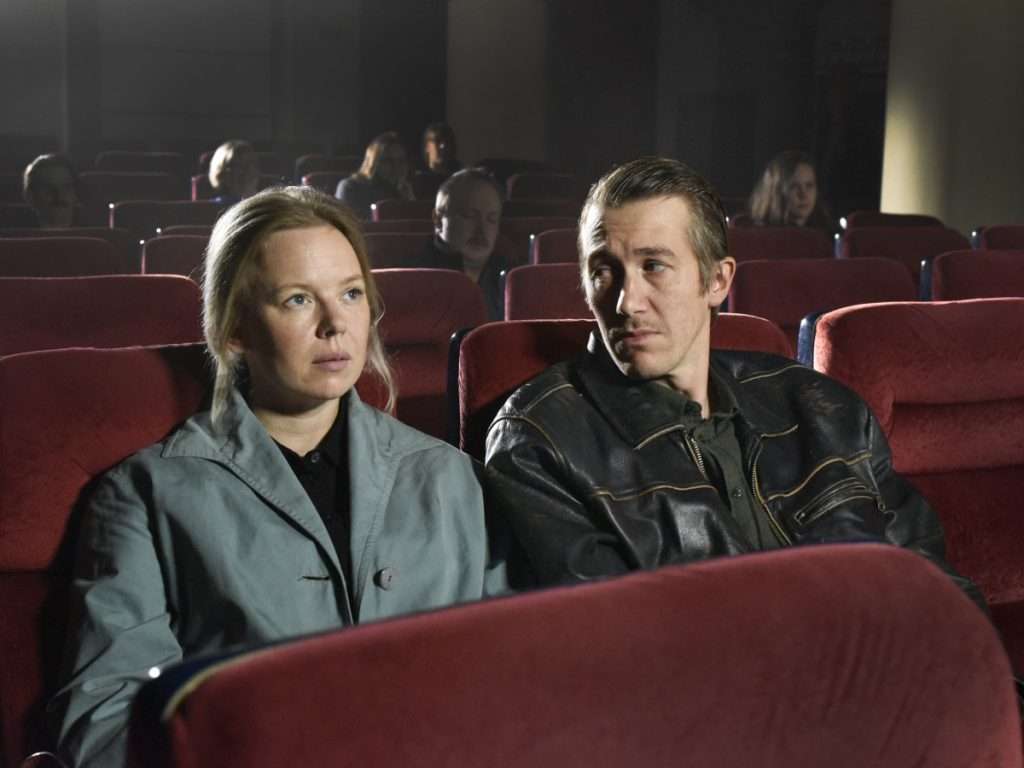
Alma Pöysti and Jussi Vatanen in ‘Fallen Leaves.’ Photo credit: MUBI
Top 10 1. Showing Up (Kelly Reichardt) 2. Fallen Leaves (Aki Kaurismäki) 3. Afire (Christian Petzold) 4. A Thousand and One (A.V. Rockwell) 5. The Holdovers (Alexander Payne) 6. May December (Todd Haynes) 7. Enys Men (Mark Jenkin) 8. Rye Lane (Raine Allen-Miller) 9. The Five Devils (Léa Mysius) 10. Fremont (Babak Jalali)
Runners-up 11. Killers of the Flower Moon (Martin Scorsese) 12. Oppenheimer (Christopher Nolan) 13. Priscilla (Sofia Coppola) 14. Barbie (Greta Gerwig) 15. Asteroid City (Wes Anderson) 16. Past Lives (Celine Song) 17. The Killer (David Fincher) 18. All of Us Strangers (Andrew Haigh) 19. Anatomy of a Fall (Justine Triet) 20. Return to Seoul (Davy Chou)
David Coursen
Films listed roughly in tiers
All Dirt Roads Taste of Salt (Raven Jackson) Anselm (Wim Wenders) Killers of the Flower Moon (Martin Scorsese)
The Master Gardener (Paul Schrader) Saint Omer (Alice Diop) No Bears (Jafar Panahi) May December (Todd Haynes)
The Holdovers (Alexander Payne) Oppenheimer (Christopher Nolan) Barbie (Greta Gerwig)
Honorable Mention: American Fiction (Cord Jefferson), Showing Up (Kelly Reichardt), Asteroid City (Wes Anderson), Turn Every Page (Lizzie Gottlieb), Fallen Leaves (Aki Kaurismaki), Strange Way of Life (Pedro Almodovar)
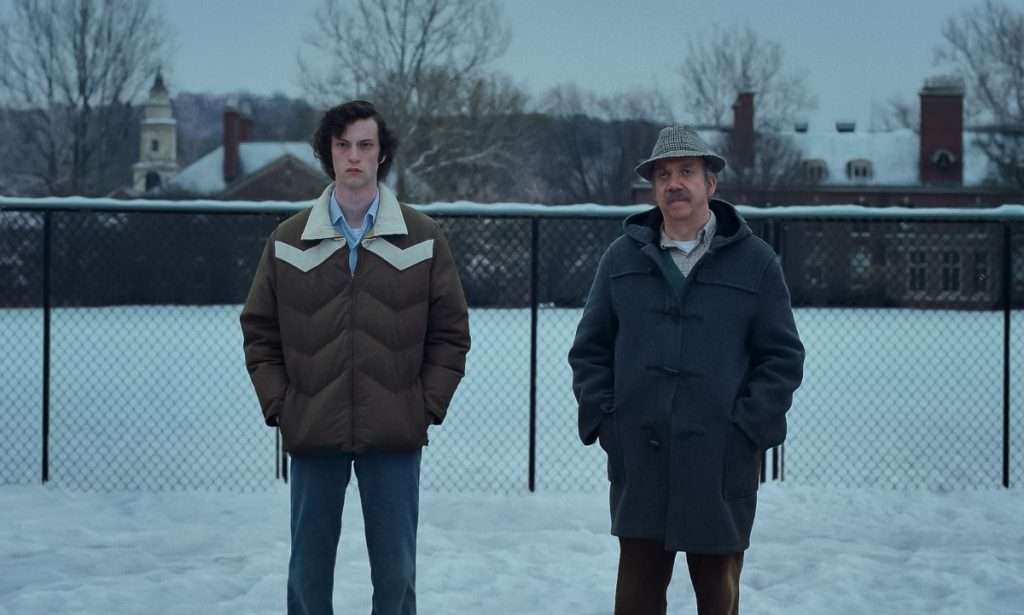
Dominic Sessa and Paul Giamatti in ‘The Holdovers.’ Photo credit: Focus Features
Best: (But It Goes to 11…): 1. Past Lives (Celine Song) 2. Revoir Paris (Alice Winocour) 3. You Hurt My Feelings (Nicole Holofcener) 4. John Wick Chapter 4 (Chad Stahelski) 5. Carmen (Benjamin Millepied) 6. Godzilla Minus One (Takashi Yamazaki) 7. Anselm (Wim Wenders) 8. Fallen Leaves (Aki Kaurismaki) 9. Are You There, God? It’s Me, Margaret (Kelly Fremon Craig) 10. Infinity Pool (Brandon Cronenberg) 11. Showing Up (Kelly Reichardt)
Next Ten: Ferrari (Michael Mann), The Night Of The 12th (Dominik Moll), It Ain’t Over (Sean Mullin), Oppenheimer (Christopher Nolan), No Hard Feelings (Gene Stupnitsky), Talk To Me (Danny Philippou, Michael Philippou), May December (Todd Haynes), Guardians of the Galaxy Vol. 3 (James Gunn), Barbie (Greta Gerwig), M3gan (Gerard Johnstone)
Best Revival: Stop Making Sense (In IMAX) (1984) (Jonathan Demme)
The Worst (In Descending Order): Ant-Man And The Wasp: Quantumania (Peyton Reed), 80 For Brady (Kyle Marvin), Holy Spider (Ali Abbasi), The Exorcist: Believer (David Gordon Green), Asteroid City (Wes Anderson)
Still to See: Poor Things, American Fiction, Maestro, Napoleon, Monster, 1946: The Mistranslation That Shifted Culture
1. All of Us Strangers (Andrew Haigh) 2. Perfect Days (Wim Wenders) 3. Killers of the Flower Moon (Martin Scorsese) 4. R.M.N. (Cristian Mungiu) 5. Poor Things (Yorgos Lanthimos) 6. Oppenheimer (Christopher Nolan) 7. Showing Up (Kelly Reichardt) 8. The Holdovers (Alexander Payne) 9. American Fiction (Cord Jefferson) 10. Barbie (Greta Gerwig)
Ten honorable mentions (in alphabetical order): Afire (Christian Petzold), Anatomy of a Fall (Justine Triet), The Eight Mountains (Felix van Groeningen and Charlotte Vandermeersch), Fallen Leaves (Aki Kaurismaki), Fair Play (Chloe Domont), Maestro (Bradley Cooper), Origin (Ava DuVernay), Past Lives (Celine Song), A Thousand and One (V.A. Rockwell), You Hurt My Feelings (Nicole Holofcener)
Ten films that made filmgoing fun in 2023: Asteroid City (Wes Anderson), Bottoms (Emma Seligman), The Boy and the Heron (Hayao Miyazaki), Godzilla Minus One (Takashi Yamazaki), John Wick: Chapter 4 (Chad Stahelski), Lola (Andrew Legge), Polite Society (Nida Manzoor), Saltburn (Emerald Fennell), Spider-Man: Across the Spiderverse (Joaquim Dos Santos, Kemp Powers, and Justin K. Thompson)
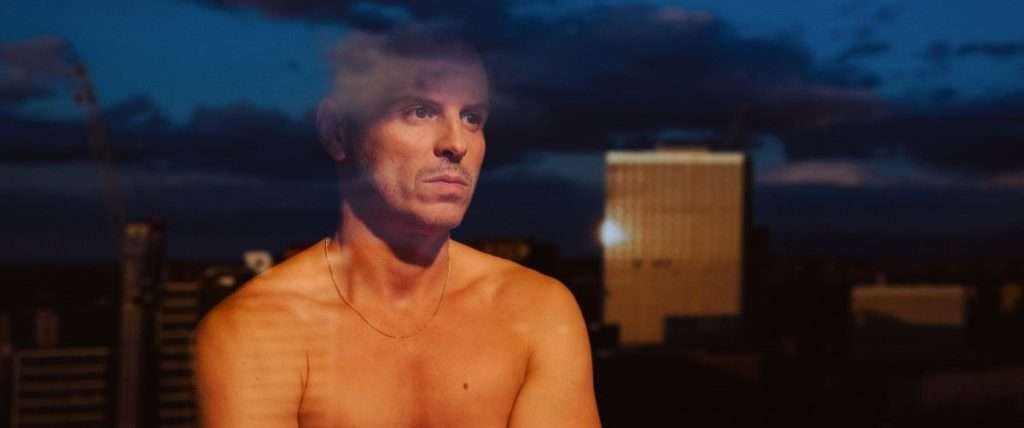
Andrew Haigh in ‘All of Us Strangers.’ Photo credit: Photo credit: Searchlight Pictures
A belated welcome to 2023 with one last look back at the best releases of 2022.
As most of us are no longer full-time critics, and many other are understandably wary about seeing movies in theaters at the moment, we haven’t had the same access to films as most film critics. Thus these are snapshots of what we have been able to see, and what impressed us over the last year.
Also, among those we lost in 2022 were friends and fellow film critics John Hartl, whose love of cinema defined the Seattle Times film coverage for his 38 year-tenure as the paper’s head film critic, and Sheila Benson, who was (among other achievements) the chief film critic for the Los Angeles Times from 1981 to 1991 before moving north and making Seattle her home.
Contributors listed in reverse alphabetical orders. Films listed in preferential orders (unless otherwise noted).
Sean Axmaker
EO (Poland, Jerzy Skolimowski)
Women Talking (Sarah Polley)
No Bears (Iran, Jafar Panahi)
Everything Everywhere All at Once (Daniels, aka Dan Kwan and Daniel Scheinert)
Tár (Todd Field)
The Quiet Girl (Ireland, Colm Bairéad)
Broker (South Korea, Hirokazu Koreeda)
The Fabelmans (Steven Spielberg)
Crimes of the Future (David Cronenberg)
Athena (France, Romain Gavras)
Honorable mentions: All the Beauty and the Bloodshed (Laura Poitras), The Banshees of Inisherin (Martin McDonagh), Decision to Leave (South Korea, Park Chan-wook), Kimi (Steven Soderbergh), Marcel the Shell With Shoes On (Dean Fleischer-Camp), The Menu (Mark Mylod), The Outfit (Graham Moore), RRR (India, S.S. Rajamouli), She Said (Maria Schrader), Saint Omer (France, Alice Diop)
And these films made my year in viewing more fun: Barbarian (Zach Cregger), Catherine Called Birdy (Lena Dunham), Dead for a Dollar (Walter Hill), Glass Onion: A Knives Out Mystery (Rian Johnson), The Northman (Robert Eggers), Vengeance (B.J. Novak), X (Ti West)
David Coursen (Washington, D.C.)
Adjusted for inflation and in alphabetical order:
Top Tier: Both Sides of the Blade (Claire Denis) Holy Spider (Ali Abbasi)
Rest of the Best: Ahed’s Knee (Nadav Lapid) Ballad of a White Cow (Behtash Sanaeeha and Maryam Moqadam) Benediction (Terrence Davies) Boy from Heaven (Tarik Saleh) Hero (Asghar Farhadi) Hive (Blerta Basholli) Hit the Road (Panah Panahi) In Front of Your Face (Hong Sang-soo) Master (Mariama Diallo) Memoria (Apichatpong Weerasethakul) R.M.N. (Cristian Mungiu)
Honorable Mention: Armageddon Time (James Gray) Happening (Audrey Diwan) Nope (Jordan Peele) Till (Chinone Chukwu)
‘Tár’ Photo credit: Florian Hoffmeister / Focus Features
Robert Cumbow
No “Top Ten” or “Best” lists for me again this year. As always I prefer to just note my favorites (and acknowledge my limitations):
FAVORITE FILMS OF 2022 Vengeance Tár The Outfit Crimes of the Future Dead for a Dollar
PROPS TO: The Banshees of Inisherin Everything Everywhere All At Once X Barbarian The Menu
APOLOGIES TO THESE THAT MIGHT MAKE THE LIST BUT I HAVEN’T SEEN THEM YET: Blonde The Fabelmans Marcel the Shell with Shoes On Elvis Decision to Leave Something in the Dirt
Kathy Fennessy
EO (Jerzy Skolimowski)
Decision to Leave (Park Chan-wook)
Benediction (Terence Davies)
Crimes of the Future (David Cronenberg)
Lost Illusions (Xavier Giannoli)
Happening (Audrey Diwal)
Aftersun (Charlotte Wells)
X (Ti West)
Great Freedom (Sebastian Meise)
Compartment Number 6 (Juho Kuosmanen)
‘Crimes of the Future.’ Photo credit: Nikos Nikolopoulos / Serendipity Point Films
Robert Horton
Top tier: Crimes of the Future (David Cronenberg). Happening (Audrey Diwan). The Eternal Daughter (Joanna Hogg). Tár (Todd Field).
Second tier: The Quiet Girl (Colm Bairéad). The Banshees of Inisherin (Martin McDonagh). Hit the Road (Panah Panahi). In Front of Your Face (Hong Sang-soo). EO (Jerzy Skolimowski). Watcher (Chloe Okuno).
Third tier: Utama (Alejandro Loayza Grisi). The Fabelmans (Steven Spielberg). Aftersun (Charlotte Wells). Close (Lukas Dhont). Three Minutes: A Lengthening (Bianca Stigter). Murina (Antoneta Alamat Kusijanovic). Benediction (Terence Davies).
The 2022 movie I regarded as the best for most of the year was Watcher, the debut feature of Chloe Okuno — a film of Hitchcockian intelligence with no need to strew Hitchcock hommages.
The movie that now claims top line of my list is Jerzy Skolimowski’s EO, the kind of film with the power to adjust the world.
The 2022 movies I love most are The Banshees of Inisherin, by Martin McDonagh, and Steven Spielberg’s The Fabelmans.
In alphabetical order, the remainder of my Ten Best are: Broker (Hirokazu Kore-eda) Dead for a Dollar (Walter Hill) Decision to Leave (Park Chan-wook) Happening (Audrey Diwan) No Bears (Jafar Panahi) Tár(Todd Field).
I also want to highlight the extraordinary beauty and power of Taylor Sheridan’s ten-part streaming series 1883.
Moira Macdonald (Seattle Times)
(in alphabetical order) The Banshees of Inisherin Everything Everywhere All at Once Tár Turning Red
[Originally published on Straight Shooting at Queen Anne News, September 30, 2012]
Ed. note: republished to mark its availability streaming on Criterion Channel this month.
Just a quick recommend, before it’s too late. One of my very favorite movies is making a rare TV appearance Monday, Oct. 1, at 5 p.m. West Coast time on Turner Classic Movies. To “very favorite” let me add an endorsement from an erstwhile colleague and friend, the late Donald Lyons. When, in the early 1990s, a New York City–area PBS station was about to show Me and My Gal as part of a package of rare Fox Films productions from the 1930s, I urged Donald to catch it. A few minutes after the telecast ended, he phoned to say, “You told me to be sure and watch Me and My Gal. You didn’t tell me it was one of the best movies ever made.”
[Originally published in The Weekly, March 11, 1981]
A conversation early in the new film by Jean-Luc Godard: “Is it a novel, this project you’re working on?” “No, but maybe it could be.” “Maybe it should be a new type of serial—how things really are.” “It wouldn’t work around here.”
The thing about Godard movies is, he’s always talking to us. Talking to us about himself, talking to us about us, talking to us about talking to us. We don’t think about this all the time because movies are seductive, even movies that work to be analytical and disjunctive and Brechtian, and we get drawn along by the beauty of the images and the movement of things via 24 still pictures per second. But every once in a while we snap into recognition that we’re on the other end of a cinematic conversation.
Like that moment in BandofOutsiders (1964), a wacky, funny-sad romantic comedy about three young Parisians who like gangster movies and musicals, and decide they’re going to rob an isolated mansion where one of them, the girl, works. Except of course the movie dithers around a lot while they take English lessons and do a solemn softshoe in a juke bar and break the world’s speed record for touring the Louvre — and suddenly they’re on this train. The girl starts to sing a love song that turns into a ballad of loneliness. The screen fills with luminous nocturnal images of the city, streets, windows, pedestrians, the long glowworm of the train sliding toward the suburbs. Then the girl is onscreen again and she looks right into the camera and sings the last line of the song, something like “My heart goes out to all of you,” and suddenly you feel as big as the night sky and as vulnerable as a newborn child. Part of it is that the whole movie has been building on this theme without getting explicit about it. Part of it is that the girl is beautiful and fragile and brave, and also Anna Karina, the director’s wife, who’s essentially looking at him the same time she’s looking at us. And part of it is that Karina is speaking for Godard, who could never make this declaration of love and caring in person, but makes it and means it, through her and through his glorious film.
[Originally published for the University of Washington Continuing Education Film Series, February 15, 1983]
It used to be complained of Jean-Luc Godard that his movies were all over the map. Masculin-Féminin (1966) suggests, better than any other single movie he’s made, that such complaints had it turned around. What Godard was really up to was mapping all over.
At a glance, Masculin-Féminin seems fragmented and arbitrary beyond any hope of yielding a coherent viewing experience, let alone a conventionally passive entertainment about some youthful Parisians during the mid-Sixties. Its subtitle proposes that the film will consist of “15 precise facts” (or “acts” — already precision begins to generate ambiguity), but determining the dividing lines among the 15 is problematical. Occasionally the director vouchsafes a chapter number, à la Vivre sa vie, but just when we might begin to feel cozy about this, “fait” number 4 gives way to 4A. Shortly thereafter, a numerical 7 is followed by the single, screen-filling word MAIS, which is followed in turn by a numeral 8: fait 7, it would appear, is one large “but”. Okay, sure, why not! And if the question still persists why, surely the answer is that this is Godard’s way of proposing that chapters, categories, the notion of precise and discrete facts/acts, are unreliable epistemological baggage we should do well to jettison. But in so proposing, he also knows that none of us, least of all Jean-Luc Godard, can forswear trying to make organized sense of the teeming phenomena around us.
Masculin-Féminin teems thrillingly. No other filmmaker has ever looked at streets, passersby, traffic, graffiti, the exultantly grungy multifariousness of modern urban life, with such a sharp and hungry eye as Godard’s. Of course, all the French New Wavers played that game to some degree. A lot of the excitement and challenge of the nouvelle vague films had to do with their demonstration that anywhere could become a movie set and any life a movie. You live in these rooms, you work in that office, you go out at night to those cinemas and cafés? Then that is where your movie should happen. One of my favorite scenes in Masculin-Féminin is the one wherein Paul (Jean-Pierre Léaud) meets Madeleine (Chantal Goya) in a café for the purpose of proposing marriage. Godard shoots this whole desperate, can’t-get-started encounter in a single take that peregrinates up and down the length of the place, around and among tables and chairs, the camera and the couple ever seizing at new angles of approach. I’m sure Godard and cameraman Willy Kurant didn’t move a stick of furniture, but rather made the inefficient randomness of the environment part of the dynamics of the scene; the broken-field trajectories dictated by the ambient décor are as important to, and determinative of, the tenderly comic desperation of the action as the oddball characters Godard plants around the café to frustrate Paul’s design.
Contains information related to marketing campaigns of the user. These are shared with Google AdWords / Google Ads when the Google Ads and Google Analytics accounts are linked together.
90 days
__utma
ID used to identify users and sessions
2 years after last activity
__utmt
Used to monitor number of Google Analytics server requests
10 minutes
__utmb
Used to distinguish new sessions and visits. This cookie is set when the GA.js javascript library is loaded and there is no existing __utmb cookie. The cookie is updated every time data is sent to the Google Analytics server.
30 minutes after last activity
__utmc
Used only with old Urchin versions of Google Analytics and not with GA.js. Was used to distinguish between new sessions and visits at the end of a session.
End of session (browser)
__utmz
Contains information about the traffic source or campaign that directed user to the website. The cookie is set when the GA.js javascript is loaded and updated when data is sent to the Google Anaytics server
6 months after last activity
__utmv
Contains custom information set by the web developer via the _setCustomVar method in Google Analytics. This cookie is updated every time new data is sent to the Google Analytics server.
2 years after last activity
__utmx
Used to determine whether a user is included in an A / B or Multivariate test.
18 months
_ga
ID used to identify users
2 years
_gali
Used by Google Analytics to determine which links on a page are being clicked
30 seconds
_ga_
ID used to identify users
2 years
_gid
ID used to identify users for 24 hours after last activity
24 hours
_gat
Used to monitor number of Google Analytics server requests when using Google Tag Manager
1 minute
Marketing cookies are used to follow visitors to websites. The intention is to show ads that are relevant and engaging to the individual user.
A video-sharing platform for users to upload, view, and share videos across various genres and topics.
Registers a unique ID on mobile devices to enable tracking based on geographical GPS location.
1 day
VISITOR_INFO1_LIVE
Tries to estimate the users' bandwidth on pages with integrated YouTube videos. Also used for marketing
179 days
PREF
This cookie stores your preferences and other information, in particular preferred language, how many search results you wish to be shown on your page, and whether or not you wish to have Google’s SafeSearch filter turned on.
10 years from set/ update
YSC
Registers a unique ID to keep statistics of what videos from YouTube the user has seen.
Session
DEVICE_INFO
Used to detect if the visitor has accepted the marketing category in the cookie banner. This cookie is necessary for GDPR-compliance of the website.
179 days
LOGIN_INFO
This cookie is used to play YouTube videos embedded on the website.