Posted in: by Andrew Wright, by Bruce Reid, by David Coursen, by Jay Kuehner, by John Hartl, by Kathleen Murphy, by Richard T. Jameson, by Robert C. Cumbow, by Robert Horton, by Sean Axmaker, Contributors, lists

Parallax View’s Best of 2015

Welcome 2016 with one last look back at the best releases of 2015, as seen by the Parallax View contributors and a few notable Seattle-based film critics.

Soren Andersen

1. Mad Max: Fury Road
2. Spotlight
3. The Revenant
4. Ex Machina
5. Chi-Raq
6. Steve Jobs
7. Kingsman: The Secret Service
8. Goodnight Mommy
9. The Martian
10. The 100-Year-Old Man Who Climbed Out the Window and Disappeared
(more at The Seattle Times)

Sean Axmaker

1. Clouds of Sils Maria
2. Carol
3. Phoenix
4. Taxi
5. Mad Max: Fury Road
6. Spotlight
7. 45 Years
8. Mustang
9. Jauja
10. Ex Machina
And ten more that almost made the list: Brooklyn, Experimenter, Girlhood, Inside Out, It Follows, Love & Mercy, The Martian, Queen & Country, Sicario, Timbuktu
Also lists at Village Voice Film Poll and Keyframe

David Coursen

(alphabetical)
About Elly (Asghar Farhadi, Iran)
Chi-Raq (Spike Lee,US)
Leviathan (Russia, Andrey Zvyagintsev)
Love and Mercy (Bill Pohlad, US)
Sicario (Denis Villeneuve, US)
Spotlight (Tom McCarthy, US)
Taxi (Jafar Panahi, Iran)
Timbuktu (Abderrahmane Sissako, Mauritania)
The Tribe (Myroslav Slaboshpytskiy, Ukraine)
Winter Sleep (Nuri Bilge Ceylan, Turkey)
Honorable Mention: Carol (Todd Haynes, US)

Bob Cumbow

(in no intending order)
Phoenix
Brooklyn
Ex Machina
Spotlight
Sicario
Slow West
Carol
The Big Short
Bridge Of Spies
Jauja
Also: The Walk, Mr. Holmes
Endings: Phoenix, Carol
Disappointments: Spectre, The Hateful 8
Surprises: Mission Impossible: Rogue Nation, Predestination
Guilty Pleasure: San Andreas
Actors: Nina Hoss (Phoenix), Ronald Zehrfeld (Phoenix), Rooney Mara (Carol), Saorise Ronan (Brooklyn), Oscar Isaac (Ex Machina), Alicia Vikander (Ex Machina), Emily Blunt (Sicario), Mark Rylance (Bridge Of Spies), Laura Linney (Mr. Holmes)
Director: Christian Petzold (Phoenix)
Music: Thomas Newman, Bridge of Spies; Carter Burwell, Carol; Howard Shore, Spotlight; Alan Silvestri, The Walk; Andrew Lockington, San Andreas

John Hartl

45 Years
Spotlight
Brooklyn
Sicario
Trumbo
Carol
Ex Machina
Bridge of Spies
Inside Out
99 Homes
A second 10: The Walk, Joy, Timbuktu, Love & Mercy, Phoenix, Tab Hunter Confidential, Rosenwald, I’ll See You in My Dreams, The Big Short, Me and Earl and the Dying Girl.
Most miraculous restoration: The Apu Trilogy.

Robert Horton

1. 45 Years
2. Son of Saul
3. Bridge of Spies
4. Experimenter
5. It Follows
6. Clouds of Sils Maria
7. Ex Machina
8. The Assassin
9. Spotlight
10. The Duke of Burgundy
The second 10, just missing: The droll Swedish film A Pigeon Sat on a Branch Reflecting on Existence; Mad Max: Fury Road, maybe not as good as the fanboys say, but definitely good; the straightforwardly lovely Brooklyn; Viggo Mortensen in the magical Jauja; Bone Tomahawk; Mississippi Grind; the devastating documentary The Look of Silence; The Hateful Eight; the pictorially astonishing The Revenant; and—why not—Star Wars: The Force Awakens.
(via Seattle Weekly)

Richard T. Jameson

1. It Follows
2. Clouds of Sils Maria
3. Spotlight
4. Bridge of Spies
5. Room
6. The Assassin
7. 45 Years
8. Son of Saul
9. Jauja
10. Me and Earl and the Dying Girl
Close and by all means a cigar: Bone Tomahawk, Brooklyn, Blackhat, Mad Max: Fury Road, Phoenix, Ex Machina, Sicario
Pix: Saiorse Ronan, Emory Cohen, Brooklyn; Charlotte Rampling, Tom Courtenay, 45 Years
(via Framing Pictures)

Jay Kuehner

1. The Assassin (Hou Hsiao-hsien)
2. Carol (Todd Haynes)
3. Horse Money (Pedro Costa)
4. Jauja (Lisandro Alonso)
5. The Kindergarten Teacher (Nadav Lapid)
6. Heaven Knows What (Benny and Josh Safdie)
7. The Wonders (Alice Rohrwacher)
8. Arabian Nights (Miguel Gomes)
9. Phoenix (Christian Petzold)
(via Keyframe)

Moira Macdonald

(in alphabetical order)
45 Years
Brooklyn
Carol
Diary of a Teenage Girl
Grandma
Inside Out
Room
Shaun the Sheep Movie
Spotlight
The Third Man/ Tales of Hoffmann
(more at The Seattle Times)

Brian Miller

Favorite moments at Seattle Weekly

Kathleen Murphy

(in no intending order)
Brooklyn
Phoenix
Clouds of Sils Maria
45 Years
It Follows
Room
Son of Saul
Jauja
Bone Tomahawk
Mad Max: Fury Road / The Assassin
(via Framing Pictures)

Bruce Reid

1. Experimenter
2. Taxi
3. It Follows
4. The Hateful Eight
5. Welcome to New York
6. Blackhat
7. Clouds of Sils Maria
8. Timbuktu
9. Queen and Country
10. Maps to the Stars

In my absolute favorite scene of the year Stanley Milgram sits and reads from Speak, Memory the famous opening line of how we’re all our lives suspended between oblivions. Behind him two assistants lower lab equipment into a crate with the professional solemnity of undertakers.

In my second favorite scene a figure loping down a road, dressed in a ridiculous, baggy frog costume complete with bulging eyes, is revealed to be the last-act badass whose coming has been threatened throughout the movie.

One of those films made the list below; the other, Miike’s entertainingly unhinged Yakuza Apocalypse, didn’t quite. But both show off the quality that marks my favorite movies: an apparent legibility that, looked at more closely, resists any definitive reading. The ending of Milgrim’s most famous experiment is framed (literally, through a window that carves another screen inside the screen we’re watching) as a death; but one of the movie’s many points is that lives carry on, quite fulfillingly, after their supposed defining moments have passed. And when the muppet suit comes off there’s another surprise, and a further bad guy to confront.

We’re always told that movies, capturing real people moving through real environments, tend away from the mysterious and toward the concrete in a way that the other arts aren’t hampered. Except the camera’s eye can make even concrete glow with mysteries. I fell in love with the films above for the way they tracked down hallways in prisons and apartments, refusing to distinguish between the two; for the expertly timed closing of a piano lid; for the anxious way its actors clutched fishbowls, and the nonchalance with which they grasped cameras; for clouds roiling down a mountaintop, which you’d think would be beyond a director’s control; for a skyscraper flickering in a dying woman’s eyes. But it’s not just pianos and hallways, fishbowls and clouds and cameras, or even flicker. It never is.

Andrew Wright

1. Mad Max: Fury Road
2. Blackhat
3. Carol
4. The Hateful Eight
5. It Follows (Reviewed for the Portland Mercury)
6. Bridge of Spies (Reviewed for The Stranger)
7. Tangerine (Reviewed for The Stranger)
8. Bone Tomahawk
9. Creed
10. Sicario

Lists of lists:

Village Voice (poll and lists)
Roger Ebert.com
Variety
Keyframe Best Feature Films of 2015
Keyframe Daily Lists and Award 2015 Index

Polls
Film Comment
Indiewire Poll
Roger Ebert
Sight and Sound
Time Out London

Other lists
2015 additions to the National Film Registry
Kristin Thompson and David Bordwell’s Ten Best Films of … 1925
New York Times Year in Culture

Posted in: by David Coursen, Contributors, Directors, Essays, John Ford

John Ford Reprints the Legend

[Originally published in Movietone News 42, July 1975]

John Ford was probably more conscious of the meaning of history than any other American director; in a sense, the evolution of his historical vision is the measure of his growth as an artist. This evident fact is often commented on but, surprisingly, almost invariably in only the most general terms. A natural, useful way of defining this evolution more precisely is to compare closely related films Ford made at different stages of his career. An ideal subject for such a study, a pair of films sharing a common setting, literary source and group of recurring characters, is Judge Priest and The Sun Shines Bright. So closely, in fact, are the two related that it has become popular to describe the second film as a “remake” of the first. While such terminology is not exactly accurate, it does suggest that a comparative study of the two films should make it possible to analyze the evolution of Ford’s historical perspective in precise, concrete terms.

One way to measure the extent of this evolution is to compare the respective endings of the two films. Each conclusion revolves around a parade, but their tones are as different as their times, as day and night. Judge Priest ends with a sunlit parade; the final shot is of Confederate war veterans marching forward past both sides of the camera. In fact the parade literally surrounds the camera, as if to engulf the audience in the celebration taking place on screen (and the shot itself makes the ending uniquely processional in the work of a director whose final images are almost invariably recessive). In addition, the entire parade sequence is organic; everyone connected with it could be encompassed by a single longshot. Even the purely personal moments (such as a final feat of tobacco-juice-spitting marksmanship) are visually presented within their larger context, shown on a screen teeming with people.

‘The Sun Shines Bright’

The final image of The Sun Shines Bright is of Jeff Poindexter (Stepin’ Fetchit) sitting alone on a porch in the evening, lazily playing his harmonica. The music is audible, but otherwise there is scarcely a sign of life on the screen; the shot could almost be a still photograph. The final image of a solitary figure suggests an individual isolation consistent with the visual fragmentation of the entire final sequence. Each character or group, all the (surviving) members of cast and community who have been important in the film, are given recognition time here (as in Judge Priest and countless other Ford films), but in this case the reintroduction is accomplished without any unifying group shots; we see each pan of the community but never the entire social organism. For example, while the title character in Judge Priest last appears on the screen as one (not particularly important) part of the veterans’ parade, in The Sun Shines Bright he is last shown walking away from the camera into his house alone. As he passes through a doorway, a room, and another doorway beyond the realm of natural lighting, we are watching an individual receding into legend rather than a social group advancing into a dynamic future.

Read More “John Ford Reprints the Legend”

Posted in: by Bruce Reid, by David Coursen, by John Hartl, by Kathleen Murphy, by Richard T. Jameson, by Robert Horton, by Sean Axmaker, by Sheila Benson, Contributors, lists

Parallax View’s Best of 2012

Welcome 2013 with one last look back at the best releases of 2011, as seen by the contributors to Parallax View and a few notable Seattle-based film critics.

Sean Axmaker

1. Holy Motors
2. Zero Dark Thirty
3. Moonrise Kingdom
4. Margaret (2011 in NY and LA, didn’t screen elsewhere until 2012)
5. Cosmopolis
6. Once Upon a Time in Anatolia
7. The Master
8. The Turin Horse
9. Tabu
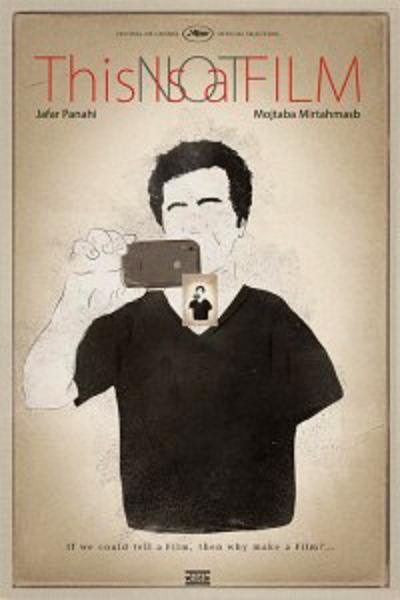
10. This is Not a Film

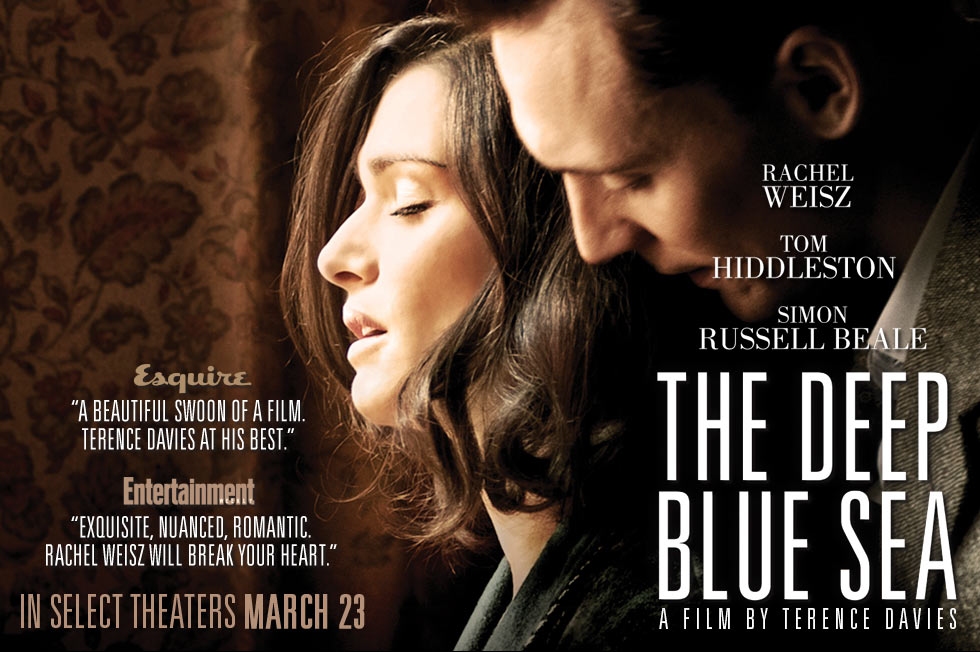
Ten more: Amour, Barbara, Deep Blue Sea, Django Unchained, Hyde Park on Hudson, I Wish, The Kid With a Bike, Life of Pi, Lincoln, Magic Mike

My greatest cinematic events of 2012
Hands down the cinematic experience of 2012 for me was the American premier of the complete restoration of Abel Gance’s Napoleon (1927) with live accompaniment by Oakland East Bay Symphony conducted by Carl Davis. The density of Gance’s ideas, the frisson of his images and experiments in cinematic expression, and the complicated perspectives on the legacy of Napoleon have a weight that is undeniable. And watching the full 5 ½ Napoleon with a live orchestra in a magnificent theater elevates the film to a cinematic experience without parallel, and that experience electrifies the storytelling and imagery.

Local (Seattle) Event: Joe Dante’s The Movie Orgy, one-night-only at Grand Illusion. It was a perfect marriage of film and venue: the tiny, independent house with a storied history and an audience of regulars, and a scrappy compilation movie with some surreal moments and a climax that manages to bring over dozen films into the same narrative universe, if only for this moment. And hey, don’t crowd me, man.

Other published Top Ten Lists: MSN, Village Voice, Fandor

Best of Home Video lists: Top Ten Disc Debuts, Top Five Blu-rays, Top Five TV on Disc Releases, Top Five MOD Releases and Notable Achievements for 2012

Sheila Benson

(as published in Village Voice)

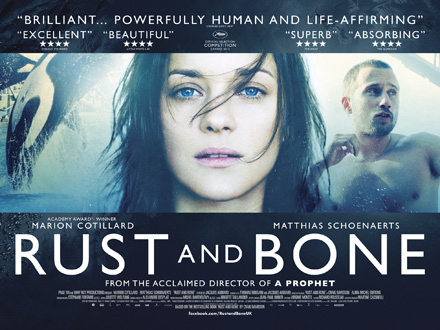
1. Rust and Bone
2. Amour
3. Argo
4. Lincoln
5. Holy Motors
6. The Master
7. The Perks of Being a Wallflower
8. Life of Pi
9. Quartet

David Coursen

(the first nine in alphabetical order, the last as the film of the—um—year)
Holy Motors, Hugo, Lincoln, Margaret, Once Upon a Time in Anatolia, Rust and Bone, Silver Linings Playbook, Tabu, Take this Waltz, and La Rabbia: the Rage of Pasolini (“a film released, in what must have been an infinitely less compelling form, in 1963, but listed this year by the National Gallery of Art as a “Washington Premiere” in a form so imbued with greatness it triggered a private pre-New Years Pasolini epiphany”).

Jim Emerson

(as published in Village Voice)

1. Holy Motors
2. Once Upon a Time in Anatolia
3. The Deep Blue Sea
4. Lincoln
5. Amour
6. Tabu
7. Moonrise Kingdom
8. The Turin Horse
9. This is Not a Film
10. The Master

John Hartl

Technically, Kenneth Lonergan’s remarkable Margaret may not have qualified as a 2012 film (a few people saw it in 2011), but the years he spent in the editing room paid off in this story of a high-strung teenager (Anna Paquin) who causes a horrendous traffic accident. The writer-director’s unique focus on responsibility–and its limits–led to the creation of the year’s most haunting and original film. Almost equally affecting were Michael Haneke’s wrenching account of an older couple facing the end of their relationship, Amour, and Paul Thomas Anderson’s The Master, about an American personality cult spinning out of control. Among the most playful new movies: Wes Anderson’s tale of romantic runaways, Moonrise Kingdom, and Richard Linklater’s stranger-than-fiction Jack Black vehicle, Bernie. The latter, like Ben Affleck’s self-assured Argo, Steven Spielberg’s painstaking Lincoln, and Kathryn Bigelow’s vigorous Zero Dark Thirty, is based on fact. Gary Ross’ The Hunger Games took a popular young-adult book and made something majestic of it. Northwest filmmaker Jon Garcia’s The Falls, a perfectly cast love story about 20-year-old Mormon missionaries, was the best of several strong gay films.

A second 10: Rust and Bone, How to Survive a Plague, The Invisible War, Keep the Lights On, Barbara, A Royal Affair, Life of Pi, Silver Linings Playbook, Queen of Versailles, Any Day Now.

Robert Horton

(as published at Everett Herald)

1. Margaret
2. Once Upon a Time in Anatolia
3. Silver Linings Playbook
4. This Is Not a Film
5. Lincoln
6. The Turin Horse
7. The Master
8. Bernie
9. Searching for Sugar Man
10. To Rome With Love

For the second 10: The Secret World of Arietty, Wreck-It Ralph, The Deep Blue Sea, Cosmopolis, Django Unchained, Holy Motors, Elena, Moonrise Kingdom, The Dark Knight Rises, The Grey.

Richard T. Jameson

1. Zero Dark Thirty
2. Lincoln
3. Django Unchained
4. Once Upon a Time in Anatolia
5. The Turin Horse
6. Silver Linings Playbook
7. Moonrise Kingdom
8. Cosmopolis
9. The Deep Blue Sea
10. The Sessions

Mooned by the misbegotten: Les Misérables, Rock of Ages

Other published lists: MSN

Jay Kuehner

(as published on Fandor)

1. Leviathan (Lucien Castaing-Taylor and Verena Paravel)
2. Tabu (Miguel Gomes)
3. Neighbouring Sounds/O som ao redor (Kleber Mendonça Filho)
4. In Another Country (Hong Sang-soo)
5. Two Years at Sea (Ben Rivers)
6. small roads (James Benning)
7. Viola (Matias Piniero)
8. O Gebo e a Sombra/Gebo and the Shadow (Manoel de Oliveira)
9. Vers Madrid/The Burning Bright (Sylvain George)
10. Arraianos (Eloy Enciso)

Moira Macdonald

(as published in The Seattle Times)

Anna Karenina
Argo
The Avengers
The Deep Blue Sea
Flight
I Wish
Lincoln
Margaret
Pina
Ruby Sparks

Ten more terrific movies, any of which might have slipped into my first ten on a different day: A Cat in Paris, Bernie, Liberal Arts, The Master, Middle of Nowhere, Moonrise Kingdom, A Royal Affair, The Sessions, The Silver Linings Playbook, Skyfall, Smashed. OK, that’s 11. So be it.

Best 2012 movies that haven’t opened in Seattle yet (but I’ve seen them): Amour, Zero Dark Thirty

Kathleen Murphy

(as published at MSN Movies)

1. Zero Dark Thirty
2. Lincoln
3. The Master
4. Amour
5. Holy Motors
6. Django Unchained
7. Moonrise Kingdom
8. Silver Linings Playbook
9. The Deep Blue Sea
10. Cosmopolis

Bruce Reid

1. The Turin Horse
2. The Kid with a Bike
3. Moonrise Kingdom
4. Cosmopolis
5. The Master
6. Holy Motors
7. This Is Not a Film
8. Universal Soldier: Day of Reckoning
9. Not Fade Away
10. The Loneliest Planet

Andrew Wright

1. Django Unchained
2. Holy Motors
3. Elena
4. Looper
5. Margaret
6. Universal Soldier: Day of Reckoning
7. Argo
8. The Master
9. The Grey
10. Skyfall

Lists of lists:
MSN Movies (lists at end of gallery)
Village Voice (poll and lists)
Indiewire’s Criticwire
Movie City News
Fandor
Time Out London
Keyframe Daily Lists and Award 2012 Index

Polls (no individual lists)
Film Comment
Indiewire Poll
Sight and Sound

Other lists
2012 additions to the National Film Registry
Kristin Thompson and David Bordwell’s Ten Best Films of … 1922
New York Times Year in Culture

See the 2012 Seattle Film Critics Wrap at the Frye, with Robert Horton hosting Kathleen Murphy and Jim Emerson, after the jump below.

Read More “Parallax View’s Best of 2012”

Posted in: by David Coursen, Contributors, Essays

Missing the Point: A.O. Scott, Manohla Dargis and the Pleasures of “Difficult” Cinema

"Jeanne Dielman, 23, quai du Commerce, 1080 Bruxelles"

The June 19 New York Times Entertainment Section ran a dialogue following up on a previous article in the May 1 Times Magazine by Dan Kois whose flavor, I suspect, is captured by the introduction the June 19 story suggesting that the article equated watching Solaris with eating “cultural vegetables;” something Krois has been told must be good for him but that he doesn’t find much fun. There is also a digression into the pros and cons of “slow cinema,” aka Ozu, Kelly Reichardt, Antonioni, Tarr, and Akerman. Leaving aside that Ozu is the greatest artist the medium has produced, and the others occupy less exalted status, the digression ignores the point that the “slow” approach has won the day. While “fast cinema” may rule the roost in Hollywood and its orbit, “slow cinema” has totally encompassed nearly all the most interesting work done outside the Hollywood axis for at least the last quarter of a century; its primacy if not quite running from A to Z at least extends from Angelopoulos through Hou Hsiao-hsien and Kiarostami all the way to, well, Wenders. Although the films, with their slow pacing and commitment to contemplation, may tax Krois’ attention span, the trend is unmistakable and the works speak for themselves.

But the larger colloquy in the article almost completely misses two key points. First, if someone who styles himself a reasonably dedicated cineaste has been working to educate his palate, not to achieve initiation into the realm of “high culture” but to optimize the ability to appreciate the varied rewards cinema has to offer, there shouldn’t be a wide gap, much less a chasm, between what he enjoys and appreciates. No one with a brain would suggest that the fact that a self-styled jazz enthusiast doesn’t “enjoy” Charlie Parker (or most of John Coltrane) says something about their art being too rarefied; the “enthusiast” is at best a boor, more likely a cretin, and not someone with whom I would want to have a serious—or any—discussion.

Read More “Missing the Point: A.O. Scott, Manohla Dargis and the Pleasures of “Difficult” Cinema”

Posted in: by David Coursen, Contributors, Essays, Film Noir, Film Reviews

Detour: Closing Down the Open Road

Ann Savage and Tom Neal

[Originally published in Movietone News 48, February 1976]

Detour is a masterpiece of wry perversity, a film virtually constructed on irony and paradox: an incredibly claustrophobic film about hitchhiking on the “open road”; the bleakest of films noirs, with the bulk of the action taking place during the day and away from the city. But perhaps the supreme ironies relate to the film itself. Despite acting that ranges from incompetent to bizarre, a storyline bordering on the absurd—alternately trashy and fanciful—and a minimum of sets or characters, Detour somehow speaks directly and compellingly to the dark side of several pervasive American myths, forcefully expresses a coherent vision of the way the world operates.

But if Detour can reward the receptive filmgoer, it does, by its very nature, demand a little more than the ordinary film. After all, there is no denying that a film shot in a very short time (rumored to have been four days, more likely five or six), on a budget of—it almost seems—something in the neighborhood of 45 cents, may lack some of the slickness and polish we ordinarily expect. But if we focus on what the film offers rather than what it lacks, we can begin to appreciate what is, on reflection, an extraordinary piece of filmmaking.

Read More “Detour: Closing Down the Open Road”

Posted in: by Andrew Wright, by David Coursen, by Jay Kuehner, by John Hartl, by Kathleen Murphy, by Richard T. Jameson, by Robert Horton, by Sean Axmaker, Contributors, Editor, lists

Parallax View’s Best of 2010

Welcome 2011 with one last look back at the best releases of 2010, as seen by the contributors to Parallax View.

Sean Axmaker

1. Carlos
2. Let Me In
3. The Social Network
4. White Material
5. Winter’s Bone
6. The Ghost Writer
7. Wild Grass
8. Eccentricities Of A Blond Haired Girl
9. Sweetgrass
10. Our Beloved Month of August

Runners up: Amer, The American, Alamar, Black Swan, Inception, Red Riding Trilogy, Somewhere, Vengeance

Best festival films I saw in 2010 without a 2010 theatrical release: Uncle Boonmee Who Can Recall His Past Lives, Poetry, Mysteries Of Lisbon

Best Unreleased film of 2007 finally getting an American release in 2010 (but still feels like a film from another era): Secret Sunshine

Most Impressive Resurrection/Restoration/Real Director’s Cut: Metropolis

Also see lists at MSN here and the Village Voice / LA Weekly poll. And the Best of DVD / Blu-ray 2010 is on Parallax View here.

David Coursen

A splendid year, in both quality and quantity.   These were all shown for the first time in the Washington, DC area in 2010.

The best film is a tie:
Certified Copy-Kiarostami
Carlos-Assayas

The next seven, in roughly descending order:
A Prophet-Jacques Audiard
Somewhere-Coppola
The Social Network-Fincher
The Ghost Writer-Polanski
The Strange Case of Angelica-Oliviera
Red Riding Trilogy-in total, with James Marsh’s 1980 segment putting it on the list
The Kids are Alright-Cholodenko

And for the final entry, a pairing I couldn’t resist:
Police, Adjective-Poromboiu
Winter’s Bone-Debra Granik

John Hartl

Truth proved far stranger than fiction in many of 2010’s best films. My favorite was Craig Ferguson’s devastating documentary, Inside Job, which painstakingly demonstrates just how our economy was hijacked by greed and ideology. In Roman Polanski’s Ghost Writer, Pierce Brosnan gives a career-best performance as a politician clearly based on Tony Blair. In Doug Liman’s Fair Game, Naomi Watts is equally persuasive as Valerie Plame Wilson, a vulnerable spy whose marriage is nearly demolished in a political feud. James Franco wins this year’s versatility award for convincingly reincarnating two exceptionally different people: Allen Ginsberg in Rob Epstein and Jeffrey Friedman’s underrated Howl and a carefree rock climber in Danny Boyle’s 127 Hours. Jesse Eisenberg deftly captures the drive and insecurities of Facebook’s billionaire chief, Mark Zuckerberg, in David Fincher’s The Social Network. The shameless wartime exploitation of the late Pat Tillman’s heroism is the focus of Amir Bar-Lev’s The Tillman Story, an excellent documentary that goes behind the headlines to suggest the personal extent of that loss. Jim Carrey’s excesses are tapped and artfully used in I Love You Phillip Morris, Glenn Ficarra and John Requa’s mostly true comedy about a con artist who is locked away in prison, but for how long? More fictional, but still quite strange, are Noah Baumbach’s Greenberg, a brave portrait of a mid-life washout played by Ben Stiller, and Derek Cianfrance’s Blue Valentine, with Michelle Williams and Ryan Gosling daring to play the walking wounded in an impossible marriage.

A second 10: The King’s Speech, Animal Kingdom, Cairo Time, Life During Wartime, Toy Story 3, Never Let Me Go, Shutter Island, Restrepo, Cell 211, Joan Rivers: A Piece of Work.

Robert Horton

1. A Prophet
2. Winter’s Bone
3. Four Lions
4. Sweetgrass
5. The Ghost Writer
6. Eccentricities of a Blond-Haired Girl
7. Mid-August Lunch
8. True Grit
9. The Kids Are All Right
10. Greenberg

See also indieWIRE here and Best and Worst lists at The Everett Herald.

Richard T. Jameson

In chronological order seen, but the first two have landed in the right place and there’s a non-chronological tie at 10.

The Ghost Writer
Winter’s Bone
Please Give
The Kids Are All Right
Un Prophète
The Social Network
Hereafter
Let Me In
Sweetgrass
The American / White Material / True Grit

See also lists at MSN and Queen Anne News.

Jay Kuehner

(as compiled for indieWIRE, originally published here)

1. Sweetgrass
2. White Material
3. Carlos
4. Everyone Else
5. The Strange Case of Angelica
6. Alamar
7. Change Nothing
8. Restrepo
9. The Anchorage
10. Daddy Longlegs

Kathleen Murphy

(as originally presented at the Frye Art Museum Critics Wrap)

1. The Ghost Writer
2. Winter’s Bone
3. Let Me In
4. Sweetgrass
5. A Prophet
6. The Social Network
7. Please Give
8. The Kids Are All Right
9. White Material
10. Black Swan

See also MSN here.

Andrew Wright

(as originally presented at the Frye Art Museum Critics Wrap)

1. A Prophet
2. Inception
3. True Grit
4. Red Riding Trilogy
5. Winter’s Bone
6. Hausu
7. The Ghost Writer
8. Four Lions
9. Greenberg
10. Let Me In

More lists:

Village Voice / LA Weekly Poll (and individual lists here)
indieWIRE Critics Survey
Movie City News list compilations (individual lists are here)
BFI 2010 Critics Poll

And the year in review from select publications in print and on the web

New York Times Year in Review
Los Angeles Times Year in Review
SF360 Top Ten Lists and Year in Film
The Onion AV Club
Slant Magazine
MSN Movies

Posted in: by David Coursen, Contributors, Directors, Film Reviews, Wim Wenders

Alice in the Cites

[Originally published in the Oregon Daily Emerald on December 1, 1977]

After a striking opening shot—partially reversed at the end of the film—Alice In The Cities (1974) introduces a solitary figure, forlornly sitting on sand, his back against a post, self-descriptively singing, “under the boardwalk, down by the sea, on a blanket with my baby, that’s where I wanna be.” The upbeat lyrics ironically counterpoint the grim image, and the German-speaking character has slightly garbled the great Drifters’ song line, which actually ends “on a blanket with my baby, is where I’ll be.”

Alice in the Cities
Yella Rotlander and Rudiger Volger: “Alice in the Cities”

This sequence is one of many, here and throughout Wenders, that use the artifacts of popular culture in the films as atmospheric details and comments—often wry—on the action. Thus, the mournful character in Alice listens to a radio play the song lyrics “I feel depressed I feel so bad,” and sees a German newspaper reporting the death of John Ford. Even the television ad line, “A mind is a terrible thing to waste” becomes both a piece of cultural garbage and an ironic call to action that the character answers by breaking the television screen. (In The American Friend (1977) a character played by Dennis Hopper introduces the cultural artifact, simultaneously evoking his character’s dislocation and the actor’s iconic significance and erratic career trajectory by shuffling across a grey Hamburg balcony, singing, from the Ballad of Easy Rider: “The river flows, it flows to the sea, and wherever that river flows God knows that’s where I wanna be.”)

Read More “Alice in the Cites”

Posted in: by David Coursen, Contributors, Directors, Essays, Sam Peckinpah

Peckinpah Doesn’t Sing Along

Sam Peckinpah
Sam Peckinpah

Sam Peckinpah, arguably the foremost American director to emerge during the sixties, developed—not to say cultivated—a persona that made his name virtually synonymous with “excessive screen violence.” While the accent was often placed on the noun, the first adjective also fit: Peckinpah was a man of appetites—the Randolph Scott character in Ride The High Country (1962) humorously cites “Appetite” as a book of the Bible—and excess was something that, when Peckinpah thought it called for, he embraced. He was capable of subtlety and emotional precision (as in the lyrically evocative Ballad Of Cable Hogue, 1970) and his excesses were purposeful; his blue-nosed detractors showed how badly they were missing the point when they claimed his violence was gratuitous. Still, from both choice and instinct, the place we now call over the top was one he often visited. Altogether an ornery cuss: combative and so confrontational the highfalutin term “transgressive” might almost fit if it didn’t sound so self-conscious and his sensibility hadn’t been, at bottom, so old school. And he willfully, almost wantonly worked without a net, and not always in a good way: given the chance recently, I couldn’t bring myself to revisit Straw Dogs (1971), which I recall all too vividly as having little to sustain the gothically creepy violence beyond pretentiously half-baked—and more than half-daft—pop anthropology, leavened with misogyny.

At his best, he could examine the moral and dramatic dimensions of masculine codes of conduct, loyalty, and integrity in a shifting and shifty western landscape with enormous force and power, orchestrating them to a sublimely resonant and cathartic culmination in the baroquely apocalyptic final shootout in The Wild Bunch (1969). High Country has a final shootout, with some of its resonance flowing from the Joel McCrea character’s statement of the Peckinpah moral code circa 1962: “All I want is to enter my house justified.”

Read More “Peckinpah Doesn’t Sing Along”